
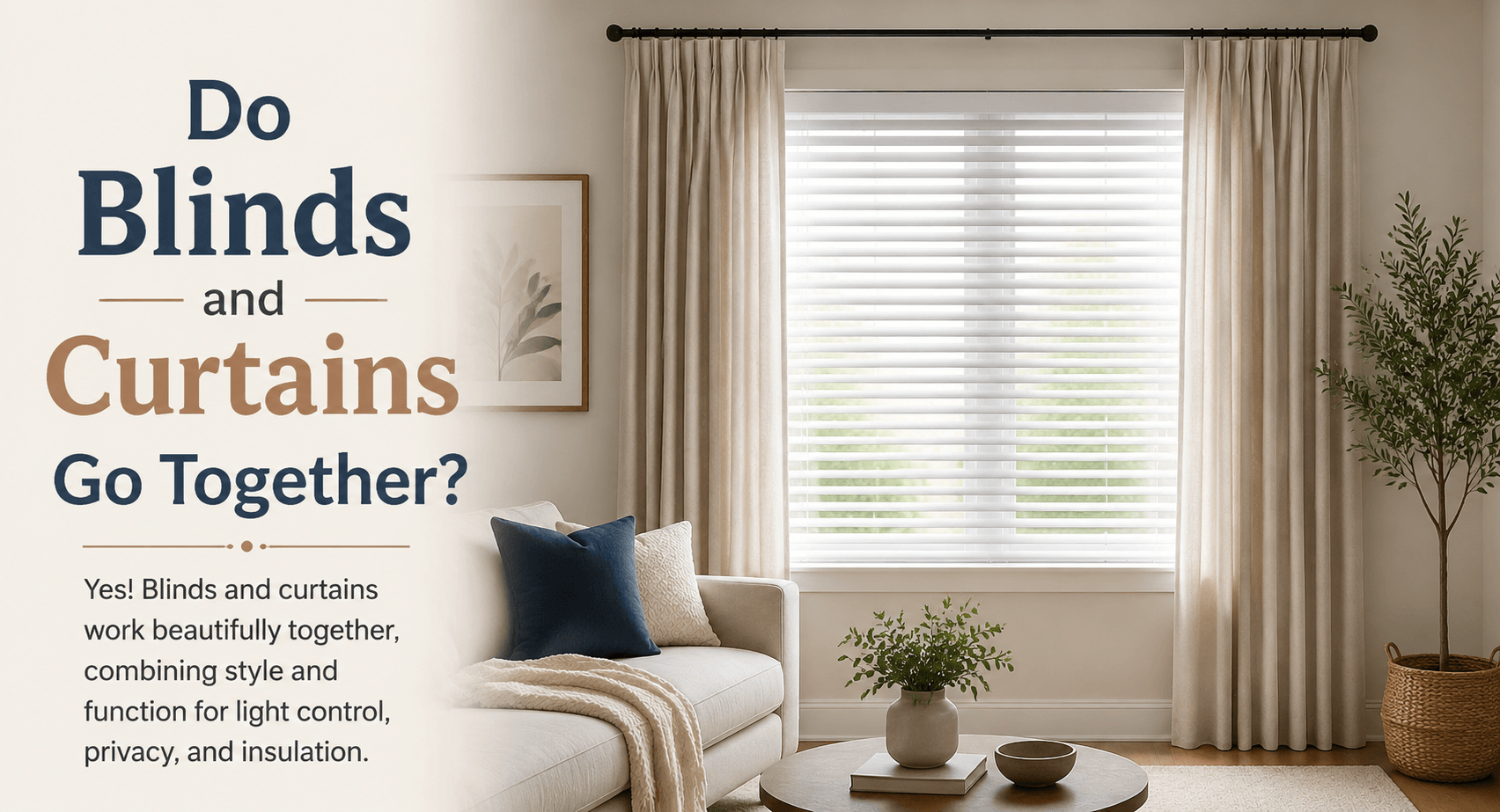
Blinds and curtains do go together, and in modern interior design they are often combined to create a more functional and visually balanced window treatment system. Instead of choosing one over the other, this layered approach allows each element to serve a specific purpose, where blinds manage light control and privacy while curtains enhance softness, warmth, and overall room aesthetics. When properly designed, this combination creates a refined and intentional finish that works in homes, apartments, villas, and commercial spaces, especially where flexibility in lighting and privacy is required throughout the day.
Why Blinds and Curtains Are Commonly Combined
The reason blinds and curtains are frequently used together is that they solve different problems that a single window covering cannot handle alone. Blinds are highly effective for controlling sunlight, reducing glare, and providing adjustable privacy, while curtains add depth, texture, and a sense of architectural completion to the room. When combined correctly, they create a layered system that enhances both performance and style, allowing the space to feel more comfortable and visually complete rather than plain or unfinished.
When Blinds and Curtains Work Best Together
Bedrooms and Private Spaces: Bedrooms are one of the most suitable environments for combining blinds and curtains because they require strong light control, privacy, and a calming atmosphere. A blackout blind can block external light effectively for better sleep, while curtains soften the room and add a luxurious, hotel-like appearance. This combination is especially useful in urban areas where early morning sunlight or street lighting can affect sleep quality.
Living Rooms and Multi-Use Areas: Living rooms benefit significantly from layered window treatments because they are used throughout the day for different activities such as relaxation, entertainment, and social gatherings. A sunscreen roller blind helps reduce glare and heat while maintaining natural daylight, while curtains add elegance and frame the windows during evening use. This balance ensures the room remains bright, comfortable, and visually appealing at all times.
Offices and Commercial Interiors: In office and commercial spaces, blinds typically take the lead in managing glare and improving productivity, while curtains are used selectively to soften meeting rooms, executive areas, or hospitality-inspired environments. This combination helps maintain a professional appearance while reducing the harshness often associated with purely functional blind-only setups.
Benefits of Combining Blinds and Curtains
| Benefit Area | How Blinds Help | How Curtains Help |
| Light Control | Adjustable sunlight filtering | Softens daylight effect |
| Privacy | Precise coverage at all times | Enhances evening privacy |
| Aesthetics | Clean and minimal look | Adds warmth and elegance |
| Insulation | Reduces heat and glare | Improves thermal comfort |
| Design Impact | Functional simplicity | Visual depth and luxury |
This combination works especially well because it brings together technical performance and decorative appeal, ensuring the window treatment is both practical and visually complete.
Best Blind and Curtain Pairings for Modern Homes
Blackout Blinds with Sheer Curtains: Blackout blinds paired with sheer curtains are one of the most effective combinations for bedrooms and guest rooms, offering complete darkness when needed and a light, airy feel during the day. The blackout layer ensures optimal sleep conditions, while sheer curtains add softness and elegance without blocking natural light completely.
Sunscreen Blinds with Drapery Curtains: Sunscreen roller blinds combined with full-length drapery curtains are ideal for living rooms and open-plan spaces where daylight control and visual refinement are equally important. The blind reduces glare and heat during the day, while curtains enhance the evening ambiance and provide a more finished interior look.
Wooden Blinds with Fabric Curtains: Wooden blinds paired with fabric curtains create a warm, natural aesthetic that works well in villas and interiors with earthy or textured design themes. The structured look of wood balances the softness of fabric, creating a layered effect that feels both sophisticated and inviting.
Zebra Blinds with Minimal Curtains: Zebra blinds can be paired with simple curtains, but this combination requires careful design coordination because zebra blinds already have a strong visual pattern. Neutral, understated curtains work best to avoid visual competition while still adding softness and framing to the window.
Common Mistakes When Pairing Blinds and Curtains
One of the most common mistakes when combining blinds and curtains is treating them as separate design decisions rather than a unified system, which often leads to mismatched proportions, poor spacing, or inconsistent styles. Another issue is using overly heavy fabrics or bulky blinds in smaller rooms, which can make the space feel visually crowded and reduce the sense of openness. Incorrect installation height, poor alignment, or mismatched colors can also disrupt the overall balance, making even high-quality materials appear uncoordinated.
How to Design a Balanced Layered Window Treatment
Creating a balanced combination of blinds and curtains requires giving each layer a clear role within the design. Blinds should focus on functional performance such as light control and privacy, while curtains should enhance aesthetics and soften the overall look of the room. Proper proportion is also essential, with curtains ideally mounted higher to create a taller visual effect and blinds positioned neatly within or around the window frame. Color coordination should remain subtle and harmonious, ensuring that both elements complement rather than compete with each other.
Choosing the Right Materials and Colors
Material selection plays a crucial role in achieving a successful layered window design because different textures influence both appearance and performance. Neutral tones such as white, beige, grey, and soft earth shades are widely used because they blend easily with various interior styles and provide long-term design flexibility. Matte finishes and natural fabrics often work better than overly glossy materials, as they create a more refined and contemporary appearance when layered with blinds.
Why Custom Design Makes a Difference
Custom-designed blinds and curtains ensure that both elements work together seamlessly, as they are measured, selected, and installed as part of a single coordinated system. This prevents common issues such as uneven stacking, light leakage, or mismatched proportions that often occur when products are chosen separately. Custom solutions also allow better integration of hardware, fabric choice, and installation style, ensuring a cleaner and more professional finish that enhances the overall interior design.
Final Thoughts
Blinds and curtains not only go together but often perform best when designed as a combined system rather than separate elements. When carefully planned based on room function, window size, and design style, this layered approach improves comfort, enhances privacy, and elevates interior aesthetics. Whether for a modern apartment, a luxury villa, or a professional office space, combining blinds and curtains creates a more complete and visually balanced environment that feels both practical and well-designed.