
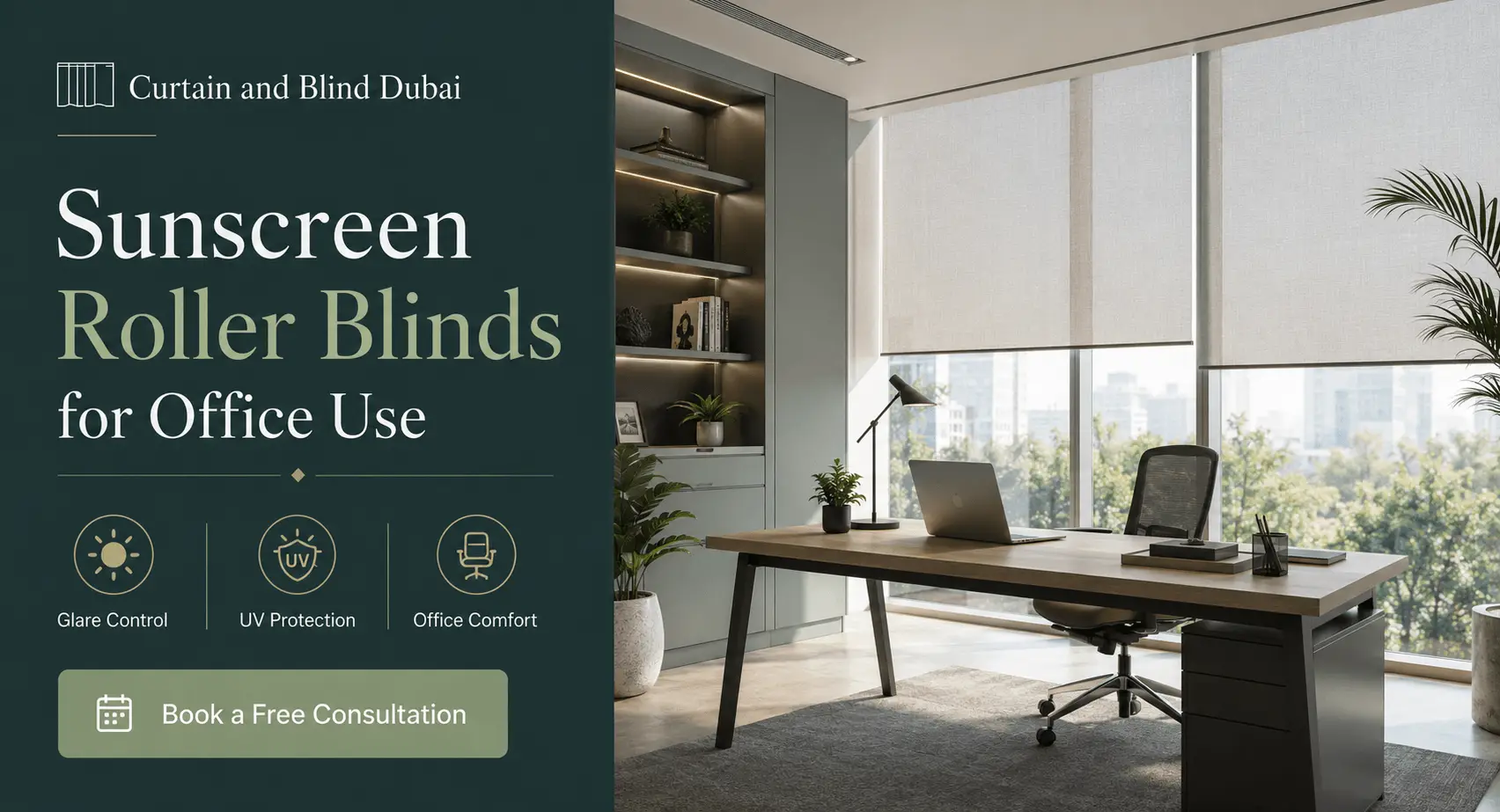
Sunscreen roller blinds for office use are a practical window treatment solution designed to manage natural daylight without completely blocking outdoor visibility, making them ideal for modern workplaces that rely heavily on visual comfort and productivity. Instead of darkening a room like blackout systems, sunscreen blinds filter sunlight to reduce glare, soften brightness, and maintain a balanced indoor environment where employees can work comfortably throughout the day. In offices with large glass facades or strong sun exposure, this balance is essential because uncontrolled daylight can quickly lead to screen glare, heat buildup, and reduced focus, all of which affect overall workplace efficiency and comfort.
Why Offices Benefit from Sunscreen Roller Blinds
Office environments require a careful balance between natural light, visual clarity, and thermal comfort, and sunscreen roller blinds provide a controlled way to achieve all three without sacrificing openness. Unlike blackout blinds that can make spaces feel enclosed, sunscreen fabrics allow daylight to enter while reducing its intensity, which helps maintain a bright and professional atmosphere. This is especially important in workspaces where employees spend long hours in front of computer screens, as glare reduction directly improves eye comfort and productivity. At the same time, these blinds preserve outward visibility, helping offices feel more open and connected to the outside environment.
Key Benefits of Sunscreen Roller Blinds in Workspaces
Reduced Screen Glare and Eye Strain: One of the primary advantages of sunscreen roller blinds is their ability to significantly reduce glare on computer screens, which helps employees work more comfortably for longer periods without experiencing eye fatigue. By filtering harsh sunlight instead of blocking it entirely, they create a softer lighting environment that supports productivity and visual clarity.
Improved Thermal Comfort: Sunscreen fabrics help reduce solar heat gain by limiting the amount of direct sunlight entering the office, which contributes to a more stable indoor temperature. This reduces hotspots near windows and supports more consistent cooling across the workspace, improving overall comfort for employees seated near glass areas.
Professional and Minimal Interior Appearance: From a design perspective, sunscreen roller blinds offer a clean, architectural look that aligns well with modern office interiors. Their minimal structure allows them to blend into the workspace without distracting from furniture, branding elements, or architectural features, creating a more organized and professional environment.
Maintained Outdoor Visibility: Unlike blackout systems, sunscreen blinds allow occupants to maintain a visual connection with the outside environment, which can improve spatial awareness and create a more pleasant working atmosphere. This balance between visibility and control is one of the reasons they are widely used in contemporary commercial design.
How Sunscreen Fabric Works in Office Blinds
Sunscreen roller blinds are made using a specially woven fabric that controls how much light and visibility passes through the material. This is defined by what is known as the openness factor, which plays a key role in determining the performance of the blind. A tighter weave reduces glare more effectively and increases privacy during the day, while a more open weave allows more natural light and clearer outward views. The right choice depends on the function of the room, the direction of sunlight, and how the space is used throughout the workday.
Choosing the Right Openness Factor for Offices
| Openness Level | Light Control | Visibility | Best Application |
| Low Openness | High glare reduction | Lower visibility | Meeting rooms, screen-heavy workstations |
| Medium Openness | Balanced control | Moderate visibility | General office areas |
| High Openness | Soft filtering | High visibility | Reception areas, executive cabins |
Selecting the correct openness factor ensures that the blinds perform according to the specific needs of each workspace rather than applying a one-size-fits-all solution across the entire office.
Where Sunscreen Roller Blinds Work Best in Offices
Open-Plan Workstations: In open-plan offices, sunscreen roller blinds help distribute natural light evenly while reducing glare across multiple screens. This creates a more comfortable and productive environment without isolating employees from daylight or creating overly dark working conditions.
Meeting Rooms and Conference Areas: Meeting rooms benefit significantly from sunscreen blinds because they improve screen visibility during presentations while maintaining a bright and engaging atmosphere. This ensures that the space remains suitable for both collaborative discussions and digital presentations without needing full blackout conditions.
Reception and Client-Facing Areas: Reception areas require a balance of visual appeal and comfort, and sunscreen roller blinds help achieve this by softening strong sunlight while maintaining an open, welcoming feel. They also enhance the professional appearance of the space, creating a positive first impression for visitors and clients.
Executive Offices: In executive cabins, sunscreen roller blinds can be used alone for a minimalist look or paired with curtains for a more refined and layered design. This flexibility allows for both functional daylight control and a premium interior aesthetic depending on the desired style.
Custom-Made Sunscreen Blinds for Better Office Performance
Custom-made sunscreen roller blinds are essential in office environments because commercial windows rarely follow standard dimensions. Accurate measurement ensures that blinds fit precisely within or over the window frame, minimizing light gaps and improving overall visual consistency across the workspace. Customization also allows businesses to choose the right fabric, openness level, and control system based on actual usage rather than generic sizing. This results in a more professional finish and better long-term performance, especially in offices with multiple windows or irregular architectural layouts.
Manual vs Motorized Sunscreen Roller Blinds
Manual Operation: Manual sunscreen blinds are suitable for smaller offices or spaces where window adjustments are infrequent. They are cost-effective, simple to maintain, and easy to operate, making them a practical solution for basic daylight control needs.
Motorized Systems: Motorized sunscreen roller blinds are ideal for larger offices, glass-front buildings, or smart workplaces where multiple blinds need to be controlled simultaneously. They allow automated scheduling, remote operation, and integration with building management systems, making them highly efficient for modern commercial environments.
Design Considerations for Office Blinds
The visual impact of sunscreen roller blinds in an office is influenced by fabric color, texture, and installation style. Darker fabrics often provide stronger glare control and clearer external views, while lighter shades help maintain a brighter and more open interior feel. The mounting method also plays a key role, as recessed installations create a seamless built-in look, while face-mounted systems may offer better coverage for windows with irregular frames or external light leakage. Selecting the right combination of design and functionality ensures a cohesive and professional workspace.
Importance of Professional Installation in Offices
Professional installation is critical in office environments because even small alignment errors can affect both appearance and performance across multiple windows. Proper installation ensures smooth operation, consistent alignment, and secure mounting, especially in large-scale commercial projects where uniformity is essential. It also reduces long-term maintenance issues and ensures that the blinds perform reliably under frequent daily use, which is common in busy office settings.
Final Thoughts
Sunscreen roller blinds are one of the most effective and balanced window treatment solutions for modern offices because they combine glare control, daylight management, and visual comfort without compromising openness or design quality. When properly selected and custom installed, they enhance productivity, improve employee comfort, and elevate the overall look of the workspace. Whether used in workstations, meeting rooms, or executive offices, they provide a practical and visually refined solution that supports the demands of contemporary commercial interiors.