
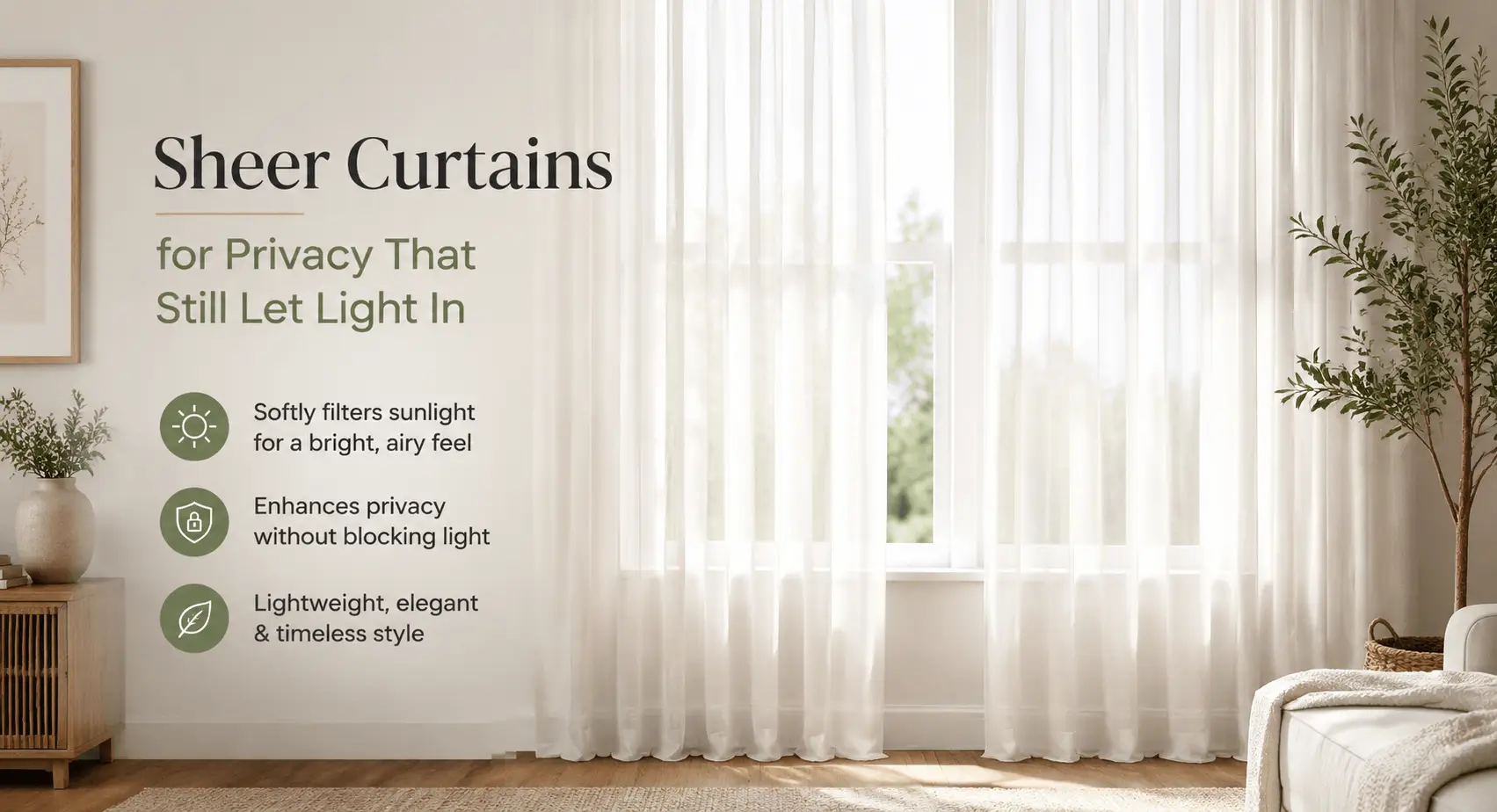
Sheer curtains for privacy are a popular window treatment solution designed to balance natural daylight with a softened sense of privacy, making them ideal for modern interiors where open, bright, and airy spaces are preferred. Instead of blocking light completely, sheer fabrics diffuse sunlight, reduce harsh glare, and soften outside visibility, allowing rooms to feel more comfortable without becoming dark or enclosed. This makes them especially suitable for living rooms, dining spaces, and open-plan layouts where maintaining brightness while reducing exposure is a key design priority.
Do Sheer Curtains Actually Provide Privacy?
Sheer curtains do provide privacy, but their effectiveness depends on lighting conditions, fabric density, and window placement. During the daytime, they are highly effective at reducing direct visibility into a room because the fabric breaks up outlines and softens shapes, making it difficult to see detailed activity from outside. However, at night, when interior lights are on and exterior surroundings are darker, their privacy level decreases significantly and silhouettes may become visible. This is why sheer curtains are best understood as daytime privacy solutions rather than full 24-hour privacy barriers, especially in urban homes or street-facing properties.
How Sheer Curtains for Privacy Work in Real Interiors
Sheer curtains function by filtering light rather than blocking it, which means they allow daylight to pass through while disrupting clear sightlines from outside. The effectiveness of this filtering depends heavily on fabric weave, texture, and fullness. Denser sheers with tighter weaves offer better privacy without sacrificing brightness, while lighter fabrics create a more transparent and airy effect. The way curtains are installed also plays a key role, as fuller widths and properly layered folds naturally improve privacy by reducing direct visibility gaps and creating a more structured visual barrier.
Importance of Fabric Density in Sheer Curtains
Lightweight Sheers for Soft Ambiance: Lightweight sheer fabrics are designed to create a soft, flowing effect that enhances brightness and openness in a room. They are ideal for spaces where privacy concerns are minimal and natural light is the primary design focus.
Medium-Density Sheers for Balanced Privacy: Medium-density fabrics offer a stronger balance between visibility control and light diffusion, making them a preferred choice for living rooms and shared spaces where daytime privacy is important.
Textured Sheers for Enhanced Coverage: Textured or linen-look sheers provide improved privacy due to their uneven weave structure, which helps obscure direct visibility while still maintaining a natural, elegant appearance.
Best Rooms to Use Sheer Curtains for Privacy
Living Rooms: Living rooms are one of the best environments for sheer curtains because they benefit from natural daylight while still requiring a level of daytime privacy. Sheers soften the space, reduce glare, and create a welcoming atmosphere without blocking outdoor views completely.
Dining Areas: Dining spaces benefit from sheer curtains because they enhance ambiance and add a refined visual layer without overwhelming the room. They help create an elegant dining experience while maintaining brightness and openness.
Home Offices: In home office environments, sheer curtains help reduce harsh daylight and screen glare while maintaining a professional, uncluttered look. They support comfort without making the space feel closed or dark.
Bedrooms (With Limitations): Sheer curtains alone are generally not sufficient for bedrooms that require strong nighttime privacy or complete light control. In such cases, they are best used as a secondary layer combined with blackout curtains or blinds.
Layering Sheer Curtains for Better Privacy Control
Layering sheer curtains with blackout curtains or roller blinds is one of the most effective ways to achieve both aesthetic softness and functional privacy. During the day, sheers provide filtered light and daytime privacy, while blackout layers offer full coverage at night. This combination allows rooms to adapt to different lighting conditions throughout the day without compromising comfort or design quality. Layered systems also add visual depth, making windows appear more premium and intentionally designed.
Factors That Influence Sheer Curtain Performance
Window Orientation and Sunlight Exposure: The direction of sunlight plays a major role in how sheer curtains perform. South- and west-facing windows typically receive stronger light, requiring denser fabrics or layered solutions for better privacy and comfort.
Interior Lighting Conditions: Evening privacy depends heavily on indoor lighting. Brighter interior lighting increases visibility through sheer fabrics, making layering more important in spaces where nighttime privacy is a priority.
Fabric Fullness and Installation: Proper fullness ensures that sheer curtains overlap sufficiently, reducing visibility gaps and improving both appearance and performance. Ceiling-mounted installations also enhance visual coverage and make rooms feel taller and more refined.
Custom Sheer Curtains vs Ready-Made Options
Custom-made sheer curtains offer significantly better performance than ready-made alternatives because they are tailored to exact window dimensions, ensuring proper fit, better fullness, and improved visual balance. Ready-made options often fall short in width and drop length, which can reduce privacy and create an unfinished appearance. Custom solutions also allow for precise selection of fabric density, texture, and layering options, resulting in a more polished and long-lasting interior finish.
Common Mistakes When Choosing Sheer Curtains
One of the most common mistakes is assuming all sheer fabrics provide the same level of privacy, when in reality fabric density and weave structure vary significantly. Another issue is incorrect sizing, which leads to flat or insufficient coverage that reduces both aesthetic appeal and functionality. Poor installation height can also limit visual impact, making ceilings feel lower and reducing the elegant flow that sheer curtains are meant to create.
When Sheer Curtains Are Not Enough
Sheer curtains alone are not suitable for spaces that require full nighttime privacy or strong light blocking, such as bedrooms facing busy streets or apartments with close neighboring buildings. In these cases, relying solely on sheers can lead to visibility issues after dark. A layered approach using blackout curtains or blinds is a more practical solution, ensuring both daytime elegance and complete nighttime privacy when needed.
Final Thoughts
Sheer curtains for privacy offer a unique balance between natural light and soft visual screening, making them an essential part of modern interior design. When chosen carefully and installed correctly, they enhance brightness, improve ambiance, and provide meaningful daytime privacy without sacrificing openness. However, their performance depends on fabric quality, installation method, and whether they are used alone or as part of a layered system. For homeowners who value light-filled interiors with a refined finish, sheer curtains remain one of the most elegant and versatile window treatment choices available today.