
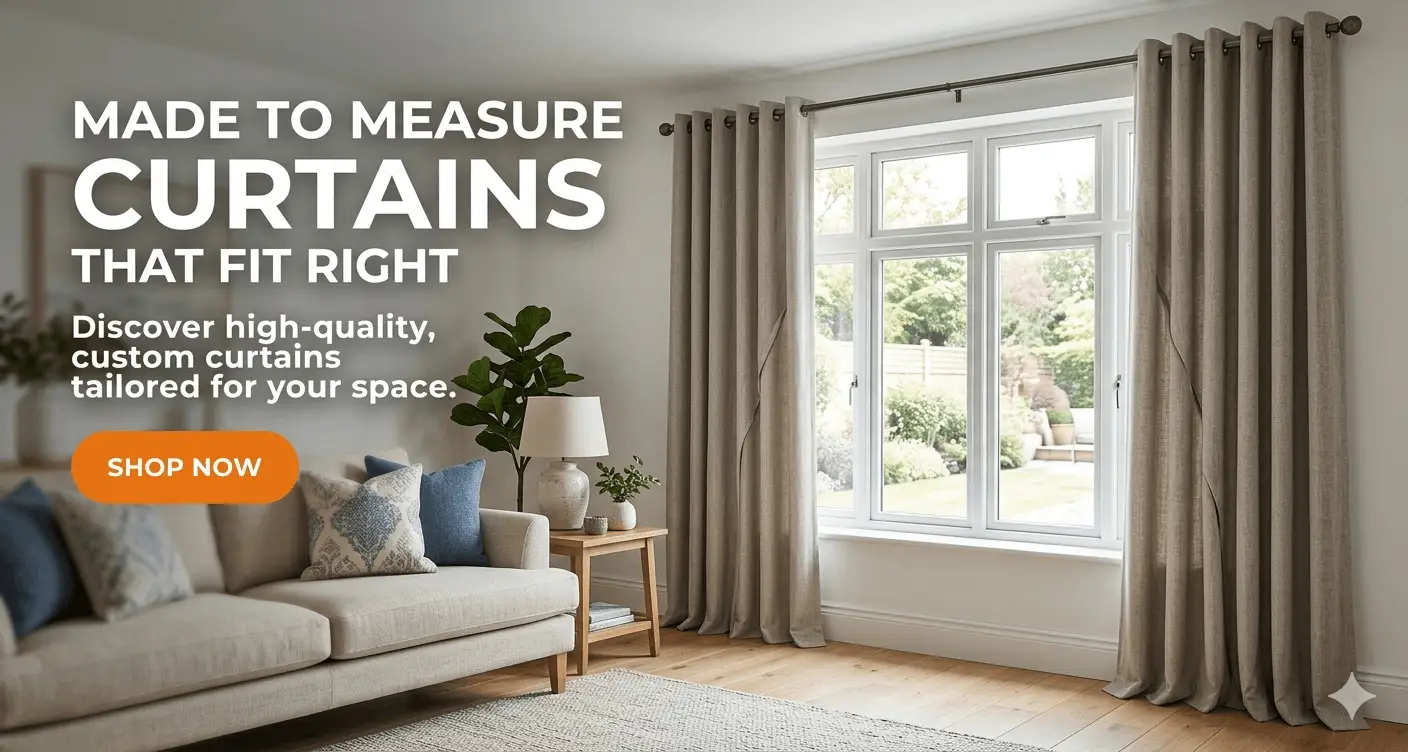
Made to measure curtains are designed to fit your exact window dimensions, interior style, and functional needs, making them a key element in modern interior design. Unlike standard ready-made options, custom curtains are created based on precise measurements, ensuring a clean, tailored finish that enhances the overall look of a room. In today’s homes and commercial spaces, windows come in all shapes and sizes, from floor-to-ceiling glass panels to narrow apartment openings, which makes one-size-fits-all solutions less effective. Made to measure curtains eliminate common issues such as uneven lengths, light leakage, and poor draping, helping interiors look more refined and intentional. They also allow complete control over fabric choice, lining, and heading style, ensuring both performance and aesthetics are aligned. Whether the goal is privacy, light control, insulation, or design consistency, custom curtains provide a solution that standard products simply cannot match.
Key Benefits of Custom Curtains for Homes and Offices
Custom curtains offer a wide range of benefits that go beyond appearance, making them a practical investment for both residential and commercial spaces. One of the main advantages is improved functionality, as curtains are tailored to the exact window size, reducing gaps and enhancing light control. This is especially important in bedrooms and offices where glare and privacy are major concerns. Another key benefit is durability, as curtains are often crafted with higher-quality stitching and better fabric selection, resulting in longer-lasting performance. They also improve energy efficiency by helping regulate indoor temperature, reducing heat gain in summer and heat loss in winter. Additionally, custom curtains provide better acoustic control, which is valuable in busy urban environments. Overall, they combine design precision with functional performance, making them a superior choice compared to off-the-shelf alternatives.
How Custom Curtains Improve Room Aesthetics and Functionality
Made to measure curtains significantly enhance both the visual appeal and usability of a space by ensuring perfect proportion and design harmony. When curtains are properly fitted, they create clean vertical lines that make ceilings appear higher and rooms feel more balanced. This contributes to a more premium and professionally designed interior look. Functionally, custom curtains are planned according to how each room is used throughout the day, ensuring optimal light control, privacy, and comfort. For example, blackout linings in bedrooms support better sleep, while sheer fabrics in living areas allow natural light without sacrificing privacy. The correct fullness and stacking also ensure curtains open and close smoothly without looking bulky or uneven. By aligning design with functionality, made to measure curtains transform windows from basic openings into key architectural features that elevate the entire room.
Choosing the Right Curtains for Each Room
Living Room Curtains: Living room curtains should balance style, light control, and comfort, making them one of the most important design elements in a home. In most cases, a layered approach works best, combining sheer curtains for daytime light filtering with heavier drapes for evening privacy. This allows flexibility throughout the day while maintaining a soft, elegant interior atmosphere. Wave or eyelet heading styles are often preferred in modern living spaces because they create smooth, continuous folds that look clean and contemporary. Fabric choice also plays a key role, as lighter materials can make the room feel airy, while heavier fabrics add richness and depth. The goal is to enhance natural light without overwhelming the space visually.
Bedroom Curtains: Bedroom curtains must prioritize privacy, light control, and comfort to support restful sleep and a relaxing environment. Blackout fabrics or blackout-lined curtains are commonly recommended because they block external light effectively, especially in urban or high-exposure areas. Proper measurement is critical here, as even small gaps can allow unwanted light to enter the room. Custom-made designs ensure full coverage of the window, improving both functionality and comfort. In addition to performance, fabric texture and color should create a calm and soothing atmosphere. Neutral tones and soft materials are often preferred to maintain a peaceful sleeping environment while still aligning with the overall bedroom design.
Office and Commercial Spaces: In office and commercial environments, curtains serve both functional and professional purposes, requiring careful selection of materials and design. The main priorities are glare reduction, privacy, and maintaining a clean, professional appearance. Light-filtering fabrics are often used in workspaces to reduce screen glare while still allowing natural daylight, which supports productivity. In meeting rooms or executive offices, heavier curtains or motorized systems may be used for better control and convenience. The design should also align with branding and interior aesthetics, ensuring a consistent and polished look. Custom solutions are particularly valuable in these spaces because they can be tailored to specific operational and design requirements.
Fabric, Lining, and Heading Styles Explained
The performance and appearance of made to measure curtains depend heavily on fabric selection, lining type, and heading style. Fabric determines how the curtain falls, how much light it filters, and how it contributes to room ambiance. Lining adds functionality by improving insulation, enhancing privacy, and increasing fabric durability over time. Heading styles such as wave, pleated, or eyelet influence the overall visual character and how the curtains stack when open. For example, wave headings offer a modern, fluid appearance, while pleated styles provide a more structured and traditional finish. Choosing the right combination ensures that curtains not only look good but also perform effectively in real-world conditions.
Comparison: Made to Measure vs Ready-Made Curtains
| Feature | Made to Measure Curtains | Ready-Made Curtains |
| Fit | Exact window measurements | Standard sizes only |
| Appearance | Tailored and premium finish | Often uneven or generic |
| Light Control | Precise coverage, minimal gaps | Limited control, possible leakage |
| Fabric Options | Wide, customizable selection | Limited choices |
| Durability | High-quality stitching and materials | Variable quality |
| Installation | Professional fitting available | Self-installed |
| Cost | Higher initial investment | Lower upfront cost |
Made to measure curtains clearly outperform ready-made options in terms of fit, durability, and overall design quality, making them a better long-term solution for most interiors.
Importance of Professional Measurement and Installation
Accurate measurement and professional installation are critical to achieving the best results with custom curtains. Even high-quality fabric and design can fail if measurements are incorrect or if installation is poorly executed. Professional services ensure that every detail, from track placement to curtain drop length, is optimized for both appearance and function. This includes considering ceiling height, window depth, furniture placement, and wall conditions before final installation. Proper installation also ensures smooth operation, correct stacking, and long-term durability. By relying on experts, homeowners and businesses reduce the risk of errors and achieve a more refined, polished finish that enhances the entire space.
Motorized Made to Measure Curtains for Smart Living
Motorized curtains offer a modern solution for convenience, comfort, and smart home integration. These systems allow users to open and close curtains using remote controls, mobile apps, or automated schedules, making them ideal for large windows, tall openings, or hard-to-reach areas. Beyond convenience, motorization helps extend fabric life by ensuring smooth and consistent operation without manual pulling. It also enhances energy efficiency by allowing precise control over sunlight and heat throughout the day. When planned from the beginning, motorized systems integrate seamlessly into the design, creating a clean and effortless appearance. This makes them an increasingly popular choice in modern homes and high-end commercial spaces.
What to Expect from a Professional Curtain Service
A professional curtain service provides a complete end-to-end experience, from consultation to installation, ensuring accuracy and convenience at every stage. The process typically begins with an on-site consultation where fabric options, design preferences, and functional needs are discussed. This is followed by precise measurement to guarantee a perfect fit. After production, professional installation ensures that curtains are mounted correctly and operate smoothly. Many services also provide guidance on fabric selection, maintenance, and long-term care. This structured approach reduces errors, saves time, and ensures a high-quality finish that aligns with both design expectations and practical needs.
Final Thoughts
Made to measure curtains are more than a decorative choice—they are a long-term investment in comfort, functionality, and interior quality. While the initial cost may be higher than ready-made alternatives, the benefits in fit, durability, performance, and visual appeal make them a more valuable option over time. Custom curtains improve how a space looks, feels, and functions every day, creating a more refined and comfortable environment. For homeowners and businesses seeking a professional finish and reliable performance, made to measure curtains remain one of the most effective window treatment solutions available today.