
Motorized blinds, also known as electric blinds or smart blinds, are window coverings that operate using a built-in motor instead of manual cords or chains. These systems allow users to open, close, or adjust blinds using a remote control, wall switch, mobile app, or smart home automation platform. The motor is usually powered by rechargeable batteries or a hardwired electrical connection, depending on the installation type and project requirements. Motorized blinds are available in multiple styles such as roller blinds, zebra blinds, and blackout blinds, making them suitable for homes, offices, and commercial interiors. The main purpose of this technology is to simplify daily light and privacy control while improving safety and enhancing the overall aesthetic of modern interiors. By removing visible cords and manual mechanisms, motorized blinds create a cleaner, more minimal look that aligns with contemporary interior design trends and smart home living standards.
Are Motorized Blinds Worth It for Daily Living?
Motorized blinds are often worth the investment for everyday living because they significantly improve convenience, comfort, and control over indoor environments. In homes with multiple windows or large glass areas, manually adjusting blinds can become repetitive and time-consuming, especially during peak sunlight hours or changing privacy needs. With automation, users can control all blinds simultaneously or schedule them to adjust automatically throughout the day. This is particularly useful in bedrooms, where blackout blinds can open gradually in the morning, or in living rooms where glare reduction is needed during specific hours. In offices, motorized blinds help maintain consistent lighting conditions for screen-based work and meetings without constant manual adjustments. The value becomes even more noticeable in busy households where ease of use directly impacts daily comfort. Instead of being a luxury-only feature, motorized blinds now function as a practical upgrade that simplifies routine tasks and enhances overall living efficiency.
Key Benefits of Motorized Blinds for Modern Homes and Offices
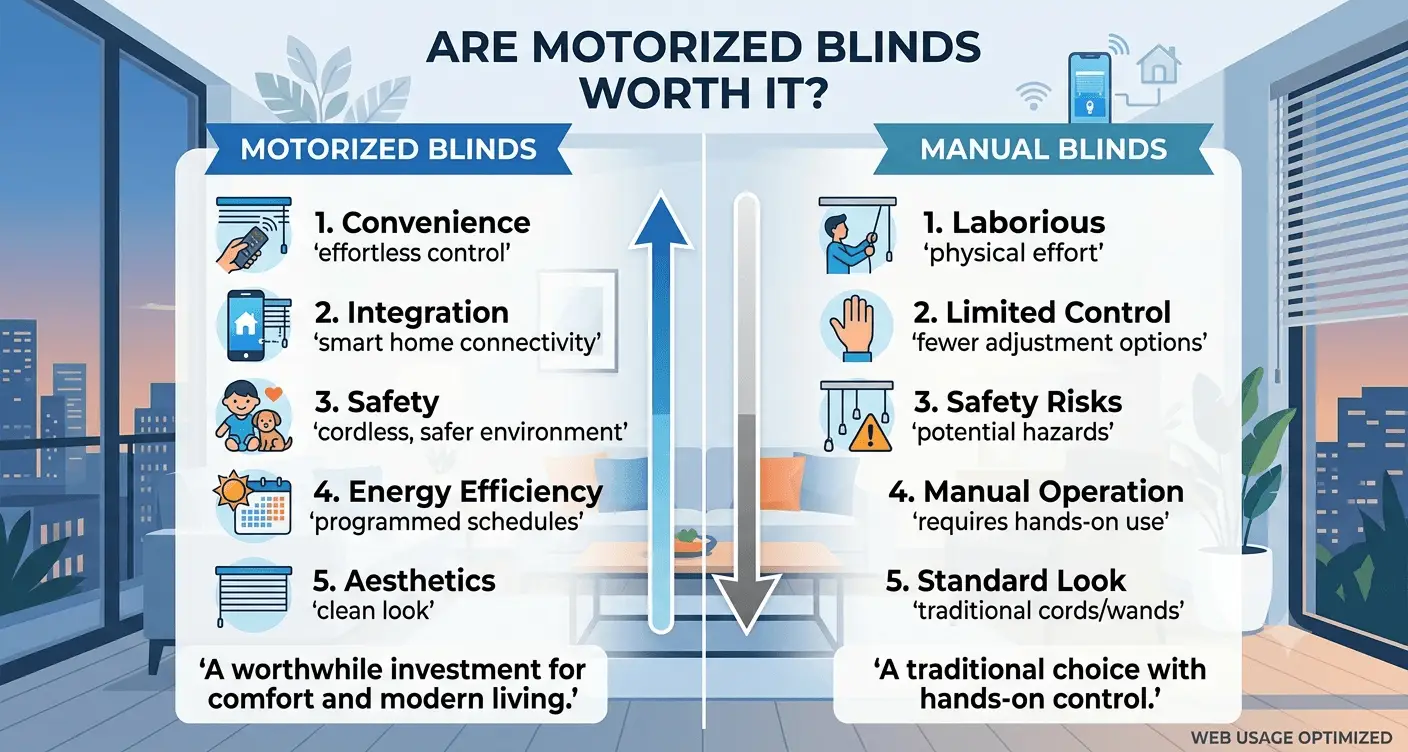
Motorized blinds offer several practical benefits that go beyond simple automation, making them a strong addition to modern residential and commercial spaces. One of the most important advantages is improved convenience, as users can control multiple windows at once without physically moving from room to room. Another key benefit is enhanced privacy control, especially in urban environments where windows face busy streets or nearby buildings. Motorized systems also improve energy efficiency by helping regulate indoor temperatures, reducing heat gain during sunny hours and minimizing reliance on cooling systems. Safety is another important factor, particularly in homes with children or pets, as motorized blinds eliminate hazardous cords. Additionally, they contribute to a more premium interior aesthetic by removing visible chains and creating a smooth, minimal look. Over time, they also reduce wear and tear caused by manual handling, making them a more durable and long-term solution for frequently used spaces.
Where Motorized Blinds Make the Most Sense
Motorized blinds deliver the highest value in spaces where functionality, accessibility, and frequent use are essential. Large windows, floor-to-ceiling glass panels, and skylights are ideal candidates because manual operation is often inconvenient or impractical. Homes with multiple windows in a single room also benefit significantly, as all blinds can be synchronized for uniform light control. In sun-facing rooms, motorized blinds help manage heat and brightness during peak hours, improving indoor comfort without constant manual adjustments. Bedrooms benefit from scheduled automation that supports better sleep cycles and morning routines. In commercial spaces, especially offices and meeting rooms, motorized blinds help maintain consistent lighting conditions throughout the day, reducing glare on screens and improving productivity. They are also highly effective in modern apartments and villas where clean interior design and smart home integration are priorities. In these scenarios, motorized blinds are not just convenient but essential for efficient space management.
Motorized Blinds vs Manual Blinds: Full Comparison
Motorized blinds and manual blinds serve the same basic purpose, but they differ significantly in convenience, performance, and long-term usability. Manual blinds are generally more affordable and suitable for smaller windows or less frequently used spaces. However, they require physical effort and can become inconvenient when multiple windows need adjustment. Motorized blinds, on the other hand, provide automated control, better consistency, and improved integration with modern smart homes. They are especially beneficial for large or hard-to-reach windows where manual operation is impractical.
| Feature | Motorized Blinds | Manual Blinds |
| Operation | Remote, app, automation | Cord or chain control |
| Convenience | High, fully automated | Moderate, manual effort required |
| Safety | Cordless, child-safe | Cords may pose safety risks |
| Aesthetic | Clean, minimal design | Visible cords or chains |
| Cost | Higher initial investment | Lower upfront cost |
| Maintenance | Battery or motor care | Minimal maintenance |
Overall, motorized blinds are better suited for users who prioritize convenience, design quality, and smart functionality, while manual blinds remain a practical choice for basic needs and budget-focused installations.
Cost Factors That Affect Motorized Blinds Pricing
The cost of motorized blinds depends on several important factors, including window size, blind type, fabric selection, and control system complexity. Larger windows require stronger motors and more durable materials, which increases the overall price. The choice between battery-powered and hardwired systems also affects cost, as hardwired installations typically involve more complex electrical work. Smart home integration, such as compatibility with voice assistants or automation systems, can further increase pricing. Fabric type plays a role as well, with blackout and thermal fabrics generally costing more than standard light-filtering options. Additionally, custom-made motorized blinds are priced higher than off-the-shelf versions because they require precise measurement, professional fabrication, and expert installation. While the upfront cost may be higher than manual blinds, the long-term value often comes from improved usability, durability, and enhanced comfort in daily use.
Smart Home Integration and Automation Features
One of the most appealing aspects of motorized blinds is their ability to integrate seamlessly with smart home systems. Users can control blinds through mobile apps, voice assistants, or automated schedules that adjust based on time of day or sunlight levels. This allows for advanced features such as sunrise wake-up settings, automatic shading during peak heat hours, or scheduled privacy control in the evenings. Smart integration also enables grouping multiple blinds together, making it easy to control entire rooms or floors with a single command. In more advanced setups, blinds can be connected to sensors that respond to temperature or light intensity, improving energy efficiency and indoor comfort. While these features add convenience, the real value lies in creating a responsive living environment that adapts automatically to daily routines without constant manual input.
Limitations and Things to Consider Before Buying
Despite their advantages, motorized blinds are not suitable for every situation, and several factors should be considered before purchase. The initial investment is higher compared to traditional blinds, which may not be ideal for budget-conscious projects or temporary spaces. Maintenance is another consideration, as battery-powered systems require periodic charging or replacement, while motor components may need servicing over time. Compatibility with existing smart home systems should also be checked to avoid integration issues. Additionally, the quality of installation plays a critical role in performance, as poorly fitted blinds can lead to operational problems or reduced lifespan. It is also important to choose the correct motor strength based on blind size and fabric weight, since underpowered systems can struggle with heavy materials. Careful planning ensures that the system performs reliably and delivers long-term value.
When Custom Motorized Blinds Are the Best Choice
Custom motorized blinds are the best option when precision, performance, and design consistency are required. They are particularly suitable for homes with large glass facades, luxury interiors, or complex window layouts where standard sizes do not fit properly. Custom solutions ensure accurate measurement, perfect alignment, and seamless integration with the overall interior design. They also allow for better fabric selection, enabling homeowners to match blinds with existing décor while maintaining functional requirements such as blackout, heat control, or light filtering. In commercial spaces, custom motorized systems support branding, comfort, and operational efficiency by providing tailored solutions for specific environments. When combined with professional installation, custom motorized blinds deliver a refined and reliable window treatment system that enhances both appearance and usability.
Final Verdict: Are Motorized Blinds Worth It?
Motorized blinds are worth it when convenience, modern design, and daily usability are important priorities. While they may not be necessary for every room or budget, they offer clear advantages in spaces where blinds are used frequently or where windows are large, tall, or difficult to access. The combination of automation, smart control, and clean aesthetics makes them a strong upgrade over traditional manual systems. When properly selected and professionally installed, motorized blinds improve comfort, enhance interior design, and simplify everyday routines. Ultimately, their value depends on how you live and use your space, but in most modern homes and offices, they represent a practical and forward-looking investment rather than just a luxury feature.