
A productive workplace starts with an environment where employees can concentrate, communicate, and work comfortably. However, direct sunlight, computer screen glare, excessive heat, and limited privacy can make everyday office tasks more challenging. The right window coverings can help address these issues while improving the appearance and functionality of a workspace. Understanding how window treatments employee productivity are connected helps businesses make informed decisions about their office interiors. In Dubai, where strong sunlight and high temperatures are important considerations, choosing suitable curtains and blinds can support a more comfortable working environment.
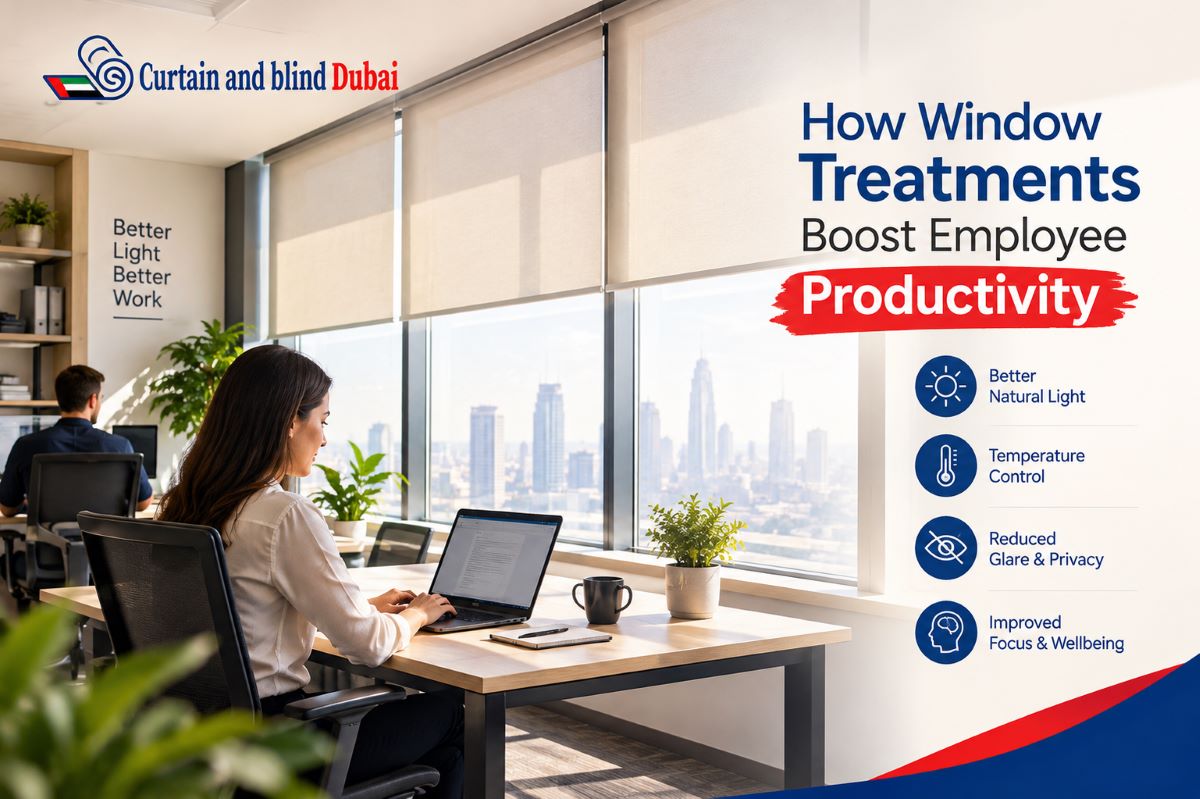
How Do Window Treatments Affect Employee Productivity?
Window treatments influence natural light, visual comfort, privacy, and the amount of sunlight entering an office. Although they cannot guarantee higher employee performance, they can help reduce environmental distractions and make workstations more comfortable. Selecting the right solution depends on the building, office layout, window direction, and employees’ daily activities.
1. Reduce Screen Glare and Improve Visual Comfort
Direct sunlight can reflect off computer screens, making text difficult to read and distracting employees during important tasks. Adjustable blinds and sunscreen roller blinds help manage incoming light without necessarily blocking the outdoor view. This can improve visual comfort for employees working with computers, attending video meetings, or reviewing documents throughout the day.
2. Help Manage Office Heat and Temperature
Large windows can allow substantial solar heat to enter an office, particularly during sunny afternoons. Suitable blinds and lined curtains can help reduce some heat gain, depending on their material, colour, construction, and installation. Managing direct sunlight may also support the existing air-conditioning system and improve comfort for employees working near windows.
3. Improve Privacy and Reduce Visual Distractions
Movement outside the building, nearby offices, and exposed workstations can distract employees. Window coverings provide greater control over outside visibility and help create privacy in meeting rooms, executive offices, and other sensitive areas. This flexibility allows businesses to maintain a bright, open atmosphere while reducing distractions where necessary.
4. Create a More Professional Office Environment
Coordinated curtains and blinds can give an office a clean, organised appearance. A suitable design can complement furniture, flooring, lighting, and corporate colours while meeting practical requirements. A professional environment can contribute to a positive workplace experience, particularly in reception areas and meeting rooms used by clients.
Best Window Treatments for Employee Productivity in Dubai
Different workplaces require different levels of light control, privacy, and convenience. The following comparison helps businesses identify suitable options for their office environments.
| Window treatment | Main benefit | Best suited for |
| Sunscreen roller blinds | Reduces glare while allowing some daylight and outside visibility | Open-plan offices and computer workstations |
| Light-filtering roller blinds | Softens incoming daylight | Private offices and general work areas |
| Blackout blinds | Blocks most incoming light when properly fitted | Presentation rooms and training spaces |
| Vertical blinds | Adjustable light control across wide windows | Large windows and glass-fronted offices |
| Commercial curtains | Adds a softer appearance and can provide additional light control | Executive offices and selected meeting rooms |
| Motorized blinds | Makes adjusting window coverings easier | Large offices and hard-to-reach windows |
Roller Blinds for Modern Office Workspaces
Roller blinds are a practical choice for contemporary offices because they have a simple appearance and are available in different fabric types. Sunscreen fabrics suit workstations that need daylight and partial outdoor visibility, while light-filtering materials provide softer illumination. Choosing the right fabric helps businesses balance glare reduction, privacy, and natural light.
Vertical Blinds for Large Windows
Vertical blinds are suitable for wide windows and glass-fronted workspaces. Their adjustable slats allow users to manage incoming sunlight and visibility throughout the day. They can be especially useful where sunlight reaches different parts of an office at different times.
Blackout Blinds for Meeting and Training Rooms
Meeting rooms sometimes require darker conditions for presentations, projected content, and video conferencing. Blackout blinds can significantly reduce incoming daylight when strong light control is needed. However, they may be less appropriate for everyday workstations where employees benefit from adjustable natural light.
Commercial Curtains and Motorized Blinds
Commercial curtains can complement an office interior while providing additional light control when appropriately lined. Motorized blinds offer convenient operation across large windows or multiple workstations. Businesses should compare installation costs, maintenance requirements, and daily operating needs before choosing between manual and motorized systems.
How to Choose Office Window Treatments That Support Productivity
Selecting suitable window treatments requires more than choosing a colour or style. Businesses should evaluate sunlight exposure, window dimensions, employee activities, privacy requirements, and long-term maintenance.
Consider Window Direction and Sunlight Exposure
East-facing windows may receive strong morning sunlight, while west-facing windows can experience intense afternoon exposure. These differences can affect screen glare and heat levels throughout the day. Observing sunlight patterns before installation helps businesses identify which windows need stronger light control.
Match the Fabric to Your Office Lighting Needs
Sunscreen fabrics help manage glare while preserving some daylight and visibility. Light-filtering fabrics soften incoming light, whereas blackout materials offer stronger light blocking. The right option depends on whether employees prioritise outdoor visibility, privacy, presentation quality, or reduced sunlight.
Select Treatments for Different Office Areas
Open-plan workstations often need glare control, while meeting rooms may require privacy and presentation-friendly lighting. Reception areas benefit from a professional appearance, and private offices may need greater control over visibility. Selecting treatments according to each area’s function can improve usability and avoid unnecessary expenditure.
Consider Durability, Cleaning, and Operating Costs
Commercial window coverings should withstand regular use and remain practical to maintain. Durable fabrics, reliable operating mechanisms, and suitable installation can help reduce ongoing maintenance difficulties. Motorization may also be worthwhile when manually adjusting numerous blinds would be inconvenient.
Window Treatments for Dubai Offices: Important Local Considerations
Dubai’s strong sunlight and hot climate make solar exposure an important consideration for commercial interiors. Offices with extensive glazing may experience glare, heat gain, and uneven comfort near windows. Choosing suitable window treatments can help businesses manage these conditions while maintaining a professional workspace.
Manage Strong Sunlight Without Blocking All Daylight
Sunscreen roller blinds can reduce direct sunlight and glare while allowing some natural light into the office. Windows exposed to intense afternoon sun may require a different fabric or an additional shading layer. The goal is to achieve comfortable lighting rather than make every room completely dark.
Choose Practical Solutions for Glass Office Buildings
Floor-to-ceiling windows create bright, modern workspaces but can also expose employees to strong sunlight. Carefully measured blinds, suitable fabrics, and motorized controls can make large windows easier to manage. Businesses should also check building requirements and safe installation methods before fitting commercial window coverings.
Can Window Treatments Improve Employee Well-Being?
A comfortable workplace supports employees by making everyday tasks easier and reducing avoidable environmental distractions. Managing harsh sunlight can improve visual comfort, while adjustable coverings can help employees control privacy in exposed areas. Maintaining access to natural daylight is also important, so window treatments should provide flexibility rather than automatically block all incoming light. These improvements may contribute to a more pleasant work environment, although their effects depend on individual needs and office conditions.
Common Mistakes to Avoid When Choosing Office Window Treatments
Businesses sometimes install blackout blinds throughout an office when adjustable sunscreen fabrics would be more appropriate. Ignoring changing sunlight patterns can also leave employees dealing with glare at certain times of day. Other mistakes include prioritising appearance over functionality, overlooking meeting-room privacy, and selecting materials that are difficult to maintain. Evaluating these factors before purchasing helps businesses choose practical solutions that meet their workplace requirements.
How to Measure the Impact of Window Treatments on Office Productivity
Businesses can evaluate whether new window treatments are helping by gathering employee feedback before and after installation. Ask staff whether screen glare, direct sunlight, and visual distractions have become easier to manage. Observe workstation comfort at different times of day and review any noticeable changes in cooling requirements. It is also useful to assess ease of operation, privacy, and maintenance. These observations provide practical evidence of improved workplace conditions without assuming that better comfort automatically leads to higher output.
Frequently Asked Questions
How do window treatments improve employee productivity?
Window treatments can help manage screen glare, direct sunlight, office heat, and visual distractions. These improvements may make workstations more comfortable and help employees concentrate on everyday tasks.
Which blinds are best for office productivity?
Sunscreen roller blinds are a useful option for many offices because they reduce glare while allowing some daylight and outside visibility. Blackout blinds are more suitable for rooms that require substantial light blocking.
Can office blinds reduce computer screen glare?
Yes. Suitable blinds can limit direct sunlight and reflections on computer screens. Results depend on fabric selection, window direction, screen placement, and changing sunlight conditions.
Do window treatments help keep Dubai offices cooler?
Some window treatments can reduce solar heat gain through windows. Their effectiveness depends on the fabric, installation, glazing, and sun exposure. They should complement appropriate insulation and air-conditioning rather than replace them.
Are sunscreen blinds better than blackout blinds for offices?
Neither option is universally better. Sunscreen blinds suit workspaces that need daylight and partial visibility, while blackout blinds are useful for presentations and rooms requiring stronger light control.
Are motorized blinds suitable for commercial offices?
Motorized blinds can be convenient for large windows, high glazing, and offices with multiple window coverings. Their suitability depends on the budget, installation requirements, and expected frequency of use.