
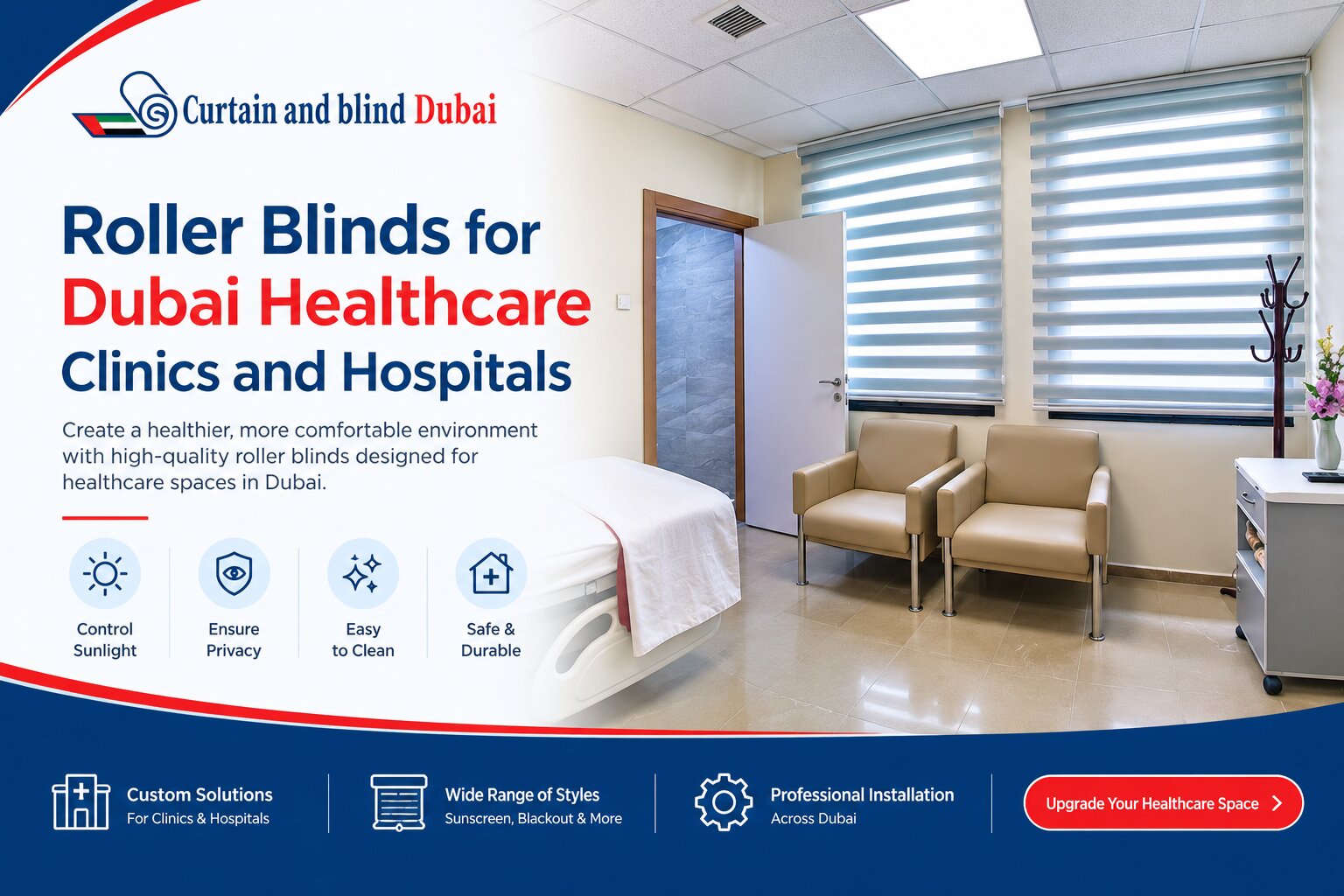
Healthcare facilities need window treatments that balance privacy, natural daylight, patient comfort, and easy maintenance. In Dubai, strong sunlight can cause glare, affect screen visibility, and make waiting areas less comfortable. Choosing suitable roller blinds can help clinics and hospitals manage these challenges while maintaining a professional interior. Roller blinds healthcare clinic Dubai is a relevant search for clinic owners, hospital administrators, and interior designers comparing practical window treatment options. The best solution depends on each room’s purpose, privacy requirements, cleaning procedures, and facility safety standards.
Why Are Roller Blinds Important for Healthcare Clinics in Dubai?
Roller blinds provide adjustable window coverage and can help manage sunlight in reception areas, consultation rooms, staff offices, and selected patient rooms. Depending on the fabric, they can filter daylight or block most incoming light. Their simple appearance also suits many modern healthcare interiors. However, no single blind type is appropriate for every clinical environment. Before purchasing, facilities should consider window orientation, patient privacy, maintenance needs, and the activities performed in each room.
Managing Sunlight and Window Glare
Direct sunlight can make waiting areas uncomfortable and create reflections on computer screens. Sunscreen Roller Blind options can filter daylight while retaining some outside visibility, depending on fabric openness. They may be suitable for reception desks and administrative areas where natural light remains desirable. However, sunscreen fabrics may not provide sufficient privacy, particularly at night when interior lights are switched on. Assess sunlight exposure and neighboring views before selecting the fabric.
Supporting Patient Comfort and Privacy
Patients benefit from comfortable lighting and appropriate visual privacy. More opaque roller blind fabrics can limit outside views, but privacy depends on fabric density, installation, and window coverage. Consultation and examination rooms may need additional screening measures. Healthcare providers should evaluate the room layout and activities before deciding whether a window blind offers sufficient privacy. A standard roller blind should not be treated as a replacement for clinical privacy systems.
Maintaining a Professional Interior
Coordinated window treatments can create a welcoming and organized appearance. Neutral colours and simple designs may complement reception furniture, consultation rooms, and patient areas. However, appearance should not be the main selection criterion. Commercial healthcare facilities also need durable materials, suitable operating mechanisms, and maintenance instructions that match their cleaning procedures.
Best Types of Roller Blinds for Clinics and Hospitals
Different roller blind fabrics offer different levels of daylight control, visibility, and privacy. Sunscreen fabrics filter sunlight, light-filtering fabrics soften brightness, and blackout fabrics block most light through the material. Motorized systems can make operation easier for large or hard-to-reach windows. The correct choice depends on the fabric specifications, room function, and installation quality.
Roller Blind Comparison Table
| Blind type | Light control | Outside visibility | Potential application |
|---|---|---|---|
| Sunscreen roller blinds | Filters sunlight | Often partly visible | Reception areas and offices |
| Light-filtering roller blinds | Softens daylight | Depends on fabric | Waiting rooms |
| Blackout roller blinds | Blocks most light through fabric | Usually limited when closed | Selected patient rooms |
| Motorized roller blinds | Depends on selected fabric | Depends on selected fabric | Large or hard-to-reach windows |
Actual performance varies by fabric, window coverage, and installation. Ask for product specifications before purchasing.
Sunscreen Roller Blinds for Natural Light
Sunscreen roller blinds may suit areas where glare reduction and daylight are priorities. Their openness factor affects how much light and visibility pass through the fabric. They can be considered for reception areas, waiting rooms, and staff offices, provided privacy requirements are met. Explore the Sunscreen Roller Blind option when comparing products for spaces that need filtered daylight.
Blackout Roller Blinds for Stronger Light Control
Blackout roller blinds provide stronger light control and may suit selected patient rooms or areas requiring reduced daylight. However, light can still enter around the edges, so the fabric alone does not guarantee complete darkness or privacy. Review the Blackout Roller Blind option and confirm the required performance before ordering.
Light-Filtering and Motorized Options
Light-filtering fabrics can soften sunlight without making a room completely dark. Motorized operation may be helpful for large windows or windows that are difficult to reach. Facilities should assess operating controls, electrical requirements, accessibility, maintenance, and safety before choosing an automated system.
How to Choose Roller Blinds for Different Healthcare Areas
Different rooms have different priorities. Reception areas may need reduced glare, while examination rooms require careful attention to privacy. Patient rooms may benefit from adjustable light control, and staff offices need comfortable working conditions. A room-by-room assessment helps facilities select products according to actual needs instead of installing one fabric throughout the building.
Reception, Waiting Rooms, and Offices
Sunscreen or light-filtering blinds may help reduce glare while preserving a bright atmosphere. Consider the position of seating, computer screens, and nearby buildings when assessing visibility. In staff offices, comfortable lighting can support everyday work. Choose materials and operating mechanisms that are suitable for regular use and the facility’s maintenance procedures.
Consultation Rooms and Patient Areas
Consultation and examination rooms may require stronger privacy than reception areas. Assess outside views, window gaps, and the nature of the clinical service before selecting a fabric. Patient rooms may need flexible light control to support rest and daily activities. If specialised lighting, infection-prevention measures, or other clinical requirements apply, confirm product suitability with the responsible facility team.
What Should Healthcare Facilities Look for in Roller Blind Materials?
Material selection should include durability, cleaning instructions, operating components, and compatibility with the facility’s maintenance procedures. Request written product specifications and confirm which cleaning methods are permitted. A surface that appears easy to clean is not automatically compliant with healthcare infection-control requirements. The facility should assess each proposed product against its own risk assessment, infection-prevention policies, and applicable local requirements.
Cleaning, Durability, and Safety
Choose products with clear care instructions and materials suitable for their intended environment. Repeated use and cleaning may affect fabrics and components over time, so consider expected maintenance and replacement costs. Check cords, chains, brackets, and controls for potential risks, particularly in areas used by children or vulnerable patients. Fire safety and other relevant building requirements should also be verified before installation.
Roller Blinds vs Curtains for Healthcare Facilities
Roller blinds offer compact window coverage, while curtains may be preferred for certain interiors or specialized applications. The right choice depends on the room’s function, maintenance procedures, and privacy requirements. It is important to distinguish window curtains, which control light and views, from clinical privacy curtains, which screen patients during care.
| Consideration | Roller blinds | Curtains |
|---|---|---|
| Space | Generally compact | Require space for fabric and tracks |
| Light control | Depends on fabric and fit | Depends on fabric and coverage |
| Maintenance | Follow product-specific instructions | Follow fabric care and laundering instructions |
| Privacy | Depends on opacity and installation | Depends on fabric and coverage |
| Suitable use | Selected windows needing adjustable coverage | Spaces where a suitable curtain system is preferred |
Neither option is automatically better for every healthcare space. Confirm cleaning requirements and clinical suitability before making a decision.
How to Maintain Roller Blinds in Clinics and Hospitals
A planned maintenance routine helps keep blinds in good working condition. Cleaning frequency should follow the facility’s policies, room risk assessment, manufacturer instructions, and infection-prevention guidance. Staff should know how to report visible dust, stains, damage, or contamination. Approved cleaning products should be used to avoid damaging fabrics or operating mechanisms.
Routine Cleaning and Inspections
Create a procedure identifying who inspects the blinds, how problems are reported, and which cleaning methods are permitted. Check fabric condition, controls, brackets, and moving parts regularly. If contamination occurs, follow the facility’s established response procedure rather than relying on ordinary dusting. Products that cannot be maintained to the required standard should be reassessed.
How Much Do Healthcare Roller Blinds Cost in Dubai?
The cost of roller blinds in Dubai depends on window dimensions, the number of windows, fabric specifications, operating systems, and installation requirements. Motorized systems may increase the initial investment, while unusual window shapes or difficult access can affect project costs. Maintenance and replacement should also be considered when comparing quotations.
How to Request an Accurate Quotation
Prepare approximate measurements, photographs, window quantities, and the intended use of each room. Explain whether you need filtered daylight, stronger light control, added privacy, or motorized operation. Ask suppliers for product specifications, installation details, warranty information, and cleaning instructions. Comparing quotations based on the same requirements helps you assess value more accurately.
Common Mistakes to Avoid When Choosing Clinic Roller Blinds
Choosing blinds based only on price or appearance can lead to problems later. A fabric may look attractive but offer insufficient privacy or unsuitable cleaning characteristics. Other common mistakes include inaccurate measurements, overlooking sunlight exposure, and assuming that blackout fabric guarantees complete darkness. Most importantly, never assume that standard roller blinds automatically meet healthcare standards. Verify product suitability before placing an order.
Why Choose Curtains and Blinds Dubai for Healthcare Window Treatments?
Curtains and Blinds Dubai offers window treatment options to explore when planning a healthcare interior. Compare Sunscreen Roller Blind and Blackout Roller Blind options according to your daylight and privacy needs. You may also consider a Vertical Blind where an alternative window treatment is appropriate. Discuss measurements, fabric specifications, operating systems, and maintenance requirements before choosing a product. Confirm available services and any healthcare-specific requirements directly with the supplier.
Frequently Asked Questions
Are roller blinds suitable for healthcare clinics and hospitals?
They can be suitable in selected areas when their materials, cleaning requirements, privacy performance, and operating mechanisms meet the facility’s needs.
Which roller blinds are best for clinic waiting rooms?
Sunscreen or light-filtering blinds may help reduce glare while preserving daylight. The best option depends on sunlight exposure and privacy requirements.
Do blackout roller blinds provide complete privacy?
Not necessarily. Gaps around the window may allow light or views through. Check fabric specifications and installation coverage.
How should roller blinds be cleaned in healthcare facilities?
Follow manufacturer instructions and the facility’s cleaning and infection-prevention policies. The appropriate method depends on the material and room risk assessment.
How much do clinic roller blinds cost in Dubai?
Costs vary according to measurements, fabric, operating system, installation, and project requirements. Request a quotation based on your specific windows.
Do roller blinds automatically meet infection-control requirements?
No. The facility must verify the product against applicable requirements, infection-prevention policies, and its own risk assessment.
Conclusion: Choosing the Right Roller Blinds for Healthcare Clinics in Dubai
Choosing suitable roller blinds requires a balance between light control, privacy, patient comfort, durability, and maintenance. Sunscreen fabrics can filter sunlight, while blackout options provide stronger light control in selected areas. The right choice depends on each room’s purpose and the product’s verified specifications. If you are researching roller blinds healthcare clinic Dubai, start with a room-by-room assessment and confirm safety, cleaning, and privacy requirements before purchasing. Explore the available options at Curtains and Blinds Dubai to find window treatment options that suit your facility’s needs.