
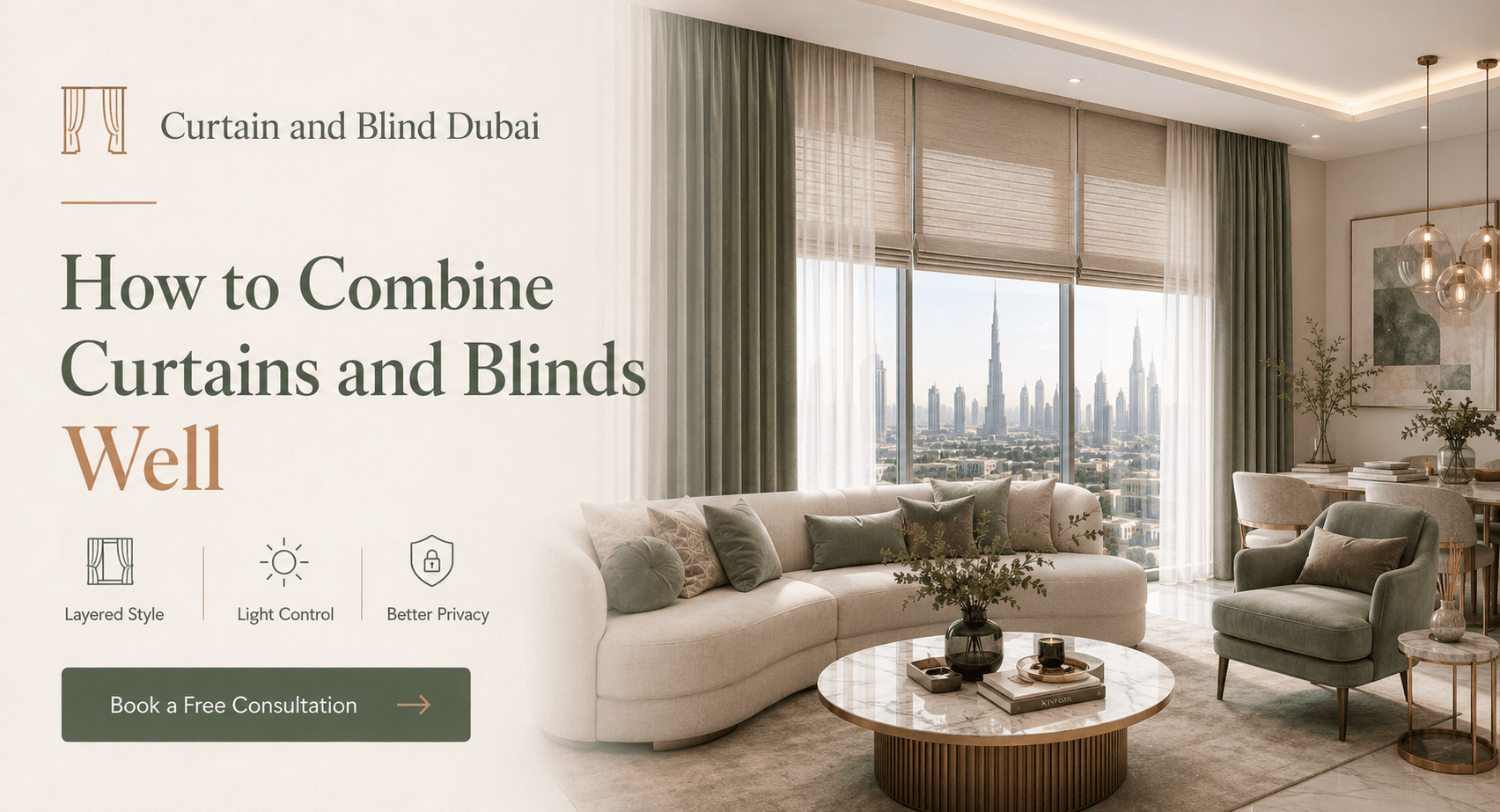
Combining curtains and blinds is one of the most effective ways to improve both the functionality and appearance of a room, especially in modern interiors where light control, privacy, and design balance all matter at the same time. Instead of relying on a single window covering, a layered approach allows each element to serve a clear purpose, such as blinds managing glare and sunlight while curtains add softness, depth, and a more refined finish. This combination is widely used in homes, apartments, and offices in regions like Dubai and the UAE, where strong daylight and privacy needs require flexible solutions that adapt throughout the day, making layered window treatments a practical design strategy rather than just a decorative choice.
Why Combining Curtains and Blinds Creates Better Window Design
The main reason to combine curtains and blinds is that no single window treatment can handle every requirement effectively, especially in spaces that demand both strong light control and visual comfort. Blinds, such as roller blinds or blackout blinds, provide precise control over sunlight and privacy, but they can sometimes feel minimal or visually plain on their own, while curtains introduce softness, elegance, and a more complete architectural look to the room. When used together, they complement each other by balancing function and aesthetics, for example, a sunscreen blind reducing glare during the day while sheer or wave curtains frame the window and enhance the overall interior design, resulting in a space that feels both practical and professionally styled.
How to Combine Curtains and Blinds Based on Room Function
Bedroom Window Treatment Combinations: In bedrooms, the primary focus is usually on privacy, darkness, and comfort, which makes the combination of blackout blinds and curtains one of the most effective solutions for restful environments. A blackout roller blind placed close to the window ensures maximum light blockage for better sleep quality, while sheer or fabric curtains soften the overall look of the room and add a calm, hotel-like atmosphere. This pairing works especially well in urban homes where morning sunlight can be strong, and it allows users to switch between complete darkness at night and a lighter, more decorative appearance during the day without compromising comfort or style.
Living Room Layered Window Treatments: Living rooms require flexibility because they are used throughout the day for different activities, from relaxation to entertainment, which makes layered window treatments particularly valuable in this space. A popular combination includes sunscreen roller blinds to control glare and heat while maintaining natural daylight, paired with wave curtains or sheer drapes that add elegance and frame large windows beautifully. This setup ensures the room remains bright and open during the day while still offering privacy and visual comfort, making it ideal for both modern apartments and spacious villas where design and practicality must work together seamlessly.
Office and Commercial Window Solutions: In office and commercial environments, functionality usually takes priority, so blinds often play the main role in controlling light, reducing screen glare, and improving productivity throughout the day. Roller blinds, vertical blinds, or motorized systems are commonly used as the primary solution, while curtains can be added selectively in meeting rooms, executive offices, or hospitality-style spaces where a warmer and more sophisticated atmosphere is desired. This approach ensures that the design remains professional and efficient while still offering moments of softness and visual comfort where needed.
Best Curtain and Blind Combinations for Modern Interiors
Roller Blinds with Wave Curtains: One of the most popular modern combinations is roller blinds paired with wave curtains, as this setup offers a clean and structured appearance while maintaining softness through fabric movement. The roller blind sits discreetly close to the window, providing precise light control, while the wave curtains add a flowing, elegant texture that enhances the overall interior aesthetic. This combination works particularly well in contemporary homes and offices where minimal design is preferred but a refined finish is still important for visual balance and comfort.
Zebra Blinds with Simple Side Curtains: Zebra blinds already feature a distinct striped pattern that controls light in adjustable layers, so they pair best with simple and neutral side curtains that do not compete for attention. The curtains should ideally remain plain and understated, allowing the blinds to remain the focal point while still adding framing and softness to the window area. This combination is suitable for modern interiors that favor structured design but still want a touch of fabric warmth to prevent the space from feeling too technical or cold.
Wooden Blinds with Linen Curtains: Wooden blinds combined with linen-style curtains create a warm, natural, and inviting atmosphere that works well in living rooms, dining areas, and interiors that focus on organic or earthy design themes. The wooden texture brings structure and depth to the window, while linen curtains introduce softness and movement that balance the overall composition. This pairing works best when colors are carefully coordinated with flooring, furniture, or wall tones to maintain harmony throughout the space.
Sheer Curtains with Blackout Blinds: Sheer curtains combined with blackout blinds offer one of the most versatile solutions for bedrooms and lounges, as they provide both aesthetic elegance and complete light control when needed. The sheer curtains maintain a light and airy daytime feel while preserving privacy, and the blackout blinds can be used when full darkness or stronger insulation is required. This dual-layer system is ideal for people who want a flexible environment that adapts easily to different times of the day without compromising on design quality.
Common Mistakes When Combining Curtains and Blinds
One of the most common mistakes when combining curtains and blinds is selecting each element separately without considering how they will work together as a complete system, which often results in mismatched colors, conflicting textures, or uneven proportions. Another frequent issue is using overly heavy fabrics or bulky blind systems in small rooms, which can make the space feel crowded and visually unbalanced rather than elegant and functional. Poor installation planning, such as incorrect track positioning or insufficient spacing between layers, can also interfere with smooth operation and reduce the overall quality of the final look, making professional measurement and coordination an important part of the process.
Choosing Colors and Textures for Layered Window Treatments
When selecting colors and textures for curtains and blinds, it is important to maintain balance by allowing one element to remain visually simple while the other introduces more character or depth to the design. Neutral shades such as white, beige, grey, and taupe are commonly used because they offer long-term flexibility and blend well with most interior styles, while stronger contrasts like charcoal and off-white can be used to create a more modern and defined aesthetic. Texture also plays a major role, as matte blinds combined with softly woven curtains tend to look more premium and natural compared to shiny synthetic materials, especially under real lighting conditions where fabric behavior becomes more visible.
Why Custom Measurement Improves Curtain and Blind Results
Custom measurement plays a critical role in achieving a professional finish when combining curtains and blinds because even small sizing errors can significantly affect appearance, light control, and overall functionality. Properly measured blinds fit tightly within window frames, reducing unwanted light gaps, while correctly tailored curtains hang evenly and create a balanced visual flow from ceiling to floor. This level of precision is especially important in modern interiors with large glass surfaces, recessed windows, or motorized systems, where alignment and proportion directly impact both performance and aesthetics, making custom-made solutions far more reliable than standard ready-made options.
Motorized Curtains and Blinds for Modern Living
Motorized curtains and blinds add an additional layer of convenience and sophistication to layered window treatments, allowing users to control light and privacy with remote systems, wall switches, or smart home integration. This solution is particularly useful for tall windows, wide glass panels, and hard-to-reach installations where manual operation is inconvenient or impractical. Beyond convenience, motorized systems also help maintain fabric quality by reducing manual handling and ensuring smoother, more consistent operation, making them a practical upgrade for both residential and commercial interiors that prioritize comfort, efficiency, and modern living standards.
Final Thoughts
The most successful approach to combining curtains and blinds is not about adding more layers, but about creating a thoughtful balance between function and design, where each element serves a clear purpose within the space. When carefully selected based on room requirements, properly measured, and professionally installed, layered window treatments can significantly improve comfort, privacy, and visual appeal while creating a cohesive and refined interior atmosphere. Whether used in bedrooms, living rooms, or office environments, this combination delivers long-term value by enhancing everyday usability while maintaining a polished and modern aesthetic that elevates the entire space.