
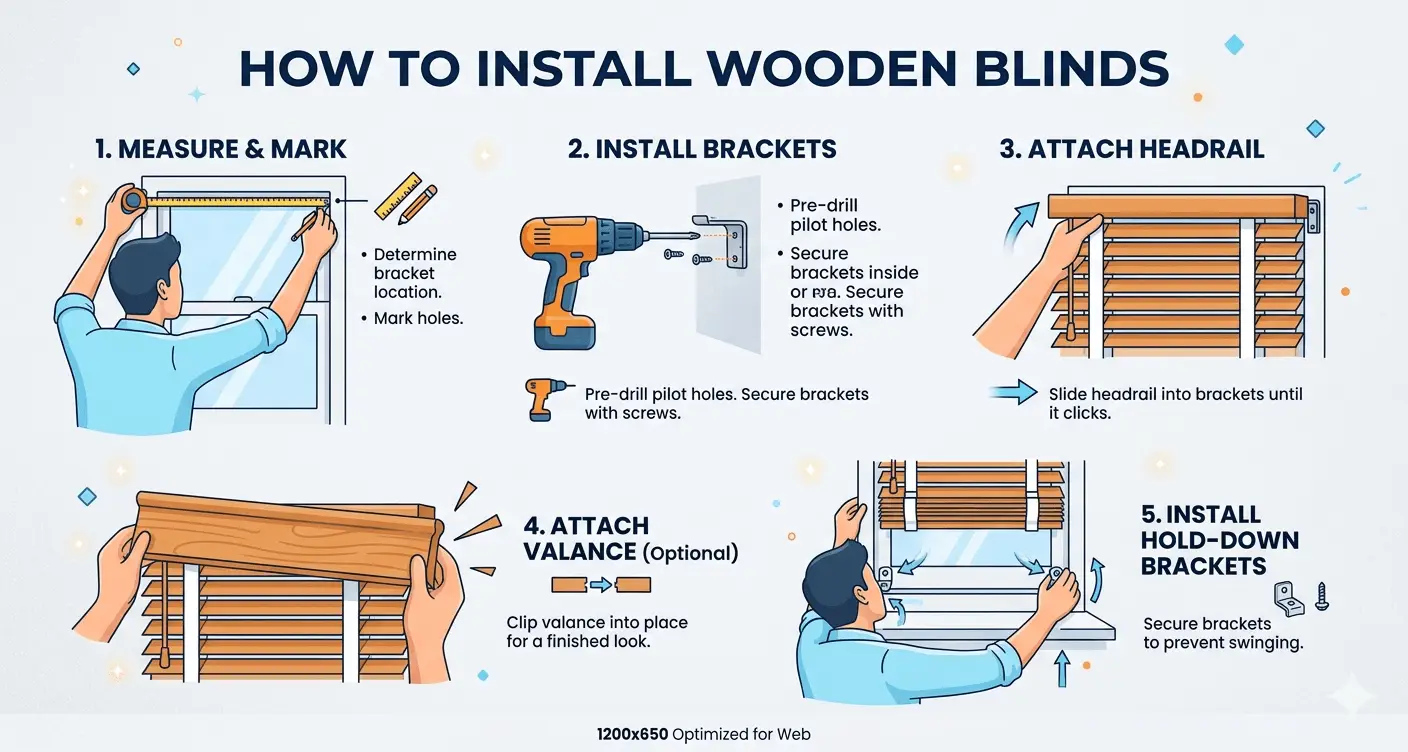
Wooden blinds are a stylish and practical choice for Dubai apartments because they offer privacy, sunlight control, and a premium interior finish. Many apartments in Dubai have large windows, balcony doors, and bright natural light throughout the day, so proper installation is important for comfort and appearance. A well-installed wooden blind sits straight, covers the window neatly, and operates smoothly every day. However, poor fitting can leave light gaps, damage walls, or make the blinds difficult to use. This guide explains how to install wooden blinds in Dubai apartments, what to check before fitting, which tools you need, common mistakes to avoid, and when professional installation is the better choice.
Why Wooden Blinds Work Well in Dubai Apartments
Wooden blinds suit Dubai apartments because they balance beauty, privacy, and function in one clean window treatment. Apartment windows often face nearby buildings, roads, balconies, or shared outdoor areas, which makes privacy a daily concern. Wooden blinds allow you to tilt the slats and control visibility without blocking all natural light. They also help reduce harsh sunlight, especially in rooms exposed to strong morning or afternoon sun. Their natural texture adds warmth to bedrooms, living rooms, dining spaces, and home offices. Unlike heavy curtains, wooden blinds take up less space and create a neat finish, which works well in both compact apartments and modern luxury interiors.
What to Check Before Installing Wooden Blinds
Before installing wooden blinds, check the window size, wall condition, sunlight direction, and privacy needs carefully. These details help you choose the right blind size, mounting style, and fixing method. Dubai apartments can have different wall surfaces, including concrete, gypsum, aluminium frames, or wooden frames, so the correct screws and plugs matter. You should also check whether the window frame has enough depth for an inside mount. If the recess is too shallow or uneven, an outside mount may give better coverage. Planning these details before installation helps avoid crooked blinds, weak brackets, and visible gaps around the window.
Window Measurement Comes First
Accurate measurement is the most important step when installing wooden blinds because even a small error can affect the final look and performance. Measure the width and height with a steel measuring tape, not a soft fabric tape. For an inside mount, measure inside the window recess at the top, middle, and bottom because some frames are not perfectly even. Use the smallest width measurement to make sure the blind fits inside the frame. For an outside mount, measure the full area you want to cover and add extra width on both sides for better privacy and light control. Always record measurements clearly before ordering or cutting blinds.
Inside Mount vs Outside Mount
Choosing between inside mount and outside mount depends on your window frame, design preference, and light-control needs. An inside mount fits within the window recess and gives a clean, built-in look. It works best when the frame is deep, straight, and strong enough to hold the brackets. An outside mount is installed above or around the window frame and covers a wider area. This option is useful when the frame is shallow, uneven, or unsuitable for drilling. It can also reduce side gaps and improve privacy. In Dubai apartments, both options work well, but the right choice depends on the window structure and room layout.
| Mount Type | Best For | Main Benefit | Consideration |
|---|---|---|---|
| Inside Mount | Deep and even window frames | Clean, modern, built-in look | May leave small side gaps |
| Outside Mount | Shallow, uneven, or unsuitable frames | Better coverage and privacy | Needs wall space around the window |
| Centre Support | Wide wooden blinds | Extra strength and stability | Usually needed for larger windows |
| Professional Mounting | Large windows and balcony doors | Secure and accurate fitting | Best for heavy blinds |
Tools Needed for Wooden Blind Installation
Installing wooden blinds properly requires basic tools and careful handling because wooden blinds are often heavier than fabric or aluminium blinds. You will usually need a measuring tape, pencil, spirit level, drill machine, screwdriver, screws, wall plugs, mounting brackets, step ladder, safety glasses, and the wooden blind kit. A spirit level is especially important because it keeps the brackets straight. If the brackets are uneven, the blind will hang crooked and may not operate smoothly. For concrete walls, strong wall plugs are usually needed. For aluminium or wooden frames, the screw type may differ. Using the wrong fixing material can weaken the installation.
Step 1: Measure the Window Carefully
Start by measuring the window width and height based on the mounting style you want. For an inside mount, measure within the recess from left to right and from top to bottom. Take more than one measurement because apartment windows may not be perfectly square. For an outside mount, measure the total area the blind should cover and allow extra width beyond the frame to reduce side light gaps. If the blind is for a balcony door or large glass panel, make sure it does not block handles, sliding tracks, or door movement. Good measurement prevents most installation problems before they happen.
Step 2: Mark the Bracket Positions
After measuring, hold the brackets in place and mark the screw holes with a pencil. The brackets should be placed evenly on both sides so the blind sits straight. Use a spirit level before drilling to confirm the marks are aligned. This step may look small, but it has a big effect on the final appearance. If the bracket marks are uneven, the wooden blind may lean to one side or look poorly fitted. For wide blinds, mark the centre support bracket as well. A centre bracket helps distribute weight and keeps the blind stable during daily use.
Step 3: Drill the Holes Safely
Drill the holes carefully using the correct drill bit for the wall or frame material. Dubai apartments often have concrete walls, so you may need masonry drill bits and wall plugs for secure fitting. If you are drilling into aluminium or wood, use the right screws to avoid damaging the surface. Do not drill too close to the edge of the frame because this can weaken the fixing point or cause cracks. Before drilling, check that the area is safe and free from hidden wires or fragile sections. Clean drilling gives stronger support and a neater finish.
Step 4: Fix the Mounting Brackets
Place the mounting brackets over the drilled holes and secure them with screws. Tighten the screws enough to hold the brackets firmly, but avoid over-tightening because this can damage the bracket or wall surface. Once fixed, check the brackets again with a spirit level. They should not move, tilt, or feel loose. Wooden blinds can be heavy, so bracket strength is very important for safety and long-term performance. If any bracket feels unstable, remove it and refit it properly before attaching the blind. A secure bracket setup is the foundation of a clean installation.
Step 5: Attach the Wooden Blind
Lift the wooden blind headrail and place it into the mounting brackets according to the blind system instructions. Most wooden blinds have a headrail that locks into the brackets with clips or covers. Make sure the headrail is seated correctly before releasing your hold. For large blinds, ask another person to help because the weight can be difficult to manage alone. Once attached, check that the blind is centred and sitting evenly across the window. Do not force the headrail into place, as this may damage the bracket or operating mechanism.
Step 6: Test the Blind Operation
After fitting the blind, test the tilt and lift systems slowly. Open and close the slats to check light control. Raise and lower the blind to make sure it moves smoothly. If the cords, wand, or mechanism feel tight, do not pull harder. Instead, check whether the headrail is properly locked and whether the brackets are aligned. A correctly installed wooden blind should move without pressure or noise. Testing the blind immediately helps you identify small fitting issues before they become daily problems.
Common Wooden Blind Installation Mistakes
Common installation mistakes include wrong measurement, uneven brackets, weak wall plugs, poor drilling, and forcing the blind mechanism. If the blind is too narrow, it may leave gaps that reduce privacy and sunlight control. If it is too wide, it may not fit the frame or may look bulky. Uneven brackets can make the blind look tilted, even if the blind itself is high quality. Another mistake is using generic screws on walls that need stronger fixing. Dubai apartments may have different wall materials, so the fixing method should match the surface. Avoiding these mistakes helps the blinds look better and last longer.
DIY Installation: When It Can Work
DIY wooden blind installation can work for small windows, simple frames, and lightweight blinds if you have the right tools and experience. It may be suitable when the wall is easy to drill, the window is low, and the measurements are simple. However, DIY fitting becomes more difficult with large windows, balcony doors, concrete walls, and heavy wooden blinds. A small mistake can damage the wall, mark the frame, or result in blinds that do not operate smoothly. While DIY may reduce initial cost, it can become more expensive if the blind needs refitting or repair later.
Why Professional Installation Is Often Better
Professional wooden blind installation is often the better choice for Dubai apartments because it gives a cleaner, safer, and more reliable result. Experienced installers measure accurately, choose the correct mounting style, use suitable fixing materials, and make sure the blind operates smoothly after fitting. They also understand common Dubai apartment challenges, such as concrete walls, aluminium frames, sliding doors, and large glass windows. Professional fitting saves time and reduces the risk of wall damage, crooked installation, or weak brackets. For premium wooden blinds, expert installation helps protect your investment and improves the final interior finish.
Wooden Blinds for Different Apartment Rooms
Wooden blinds can be used in many apartment rooms, but each space may need a slightly different approach. In living rooms, they help control daylight while keeping the space bright and welcoming. In bedrooms, they improve privacy and reduce glare, especially when paired with curtains for extra light blocking. In home offices, wooden blinds reduce screen glare and create a professional background for work calls. For dining areas, they add warmth and structure without making the room feel heavy. Choosing the right colour, slat size, and mount style helps the blinds match both the room function and interior design.
| Room | Recommended Focus | Best Installation Choice |
|---|---|---|
| Living Room | Light control and style | Inside or outside mount |
| Bedroom | Privacy and glare reduction | Outside mount for better coverage |
| Home Office | Screen comfort and clean look | Inside mount if frame allows |
| Dining Area | Warmth and design balance | Inside mount for a neat finish |
| Balcony Door Area | Coverage and smooth use | Professional fitting recommended |
Maintenance Tips After Installation
After installation, maintain wooden blinds regularly to keep them clean, smooth, and attractive. Dust the slats once a week with a soft microfiber cloth or feather duster. Start from the top and work down so dust does not settle on cleaned slats. For deeper cleaning, use a vacuum cleaner with a soft brush attachment. Avoid soaking wooden blinds with water because moisture can affect the finish. If you need to remove a mark, use a slightly damp cloth and dry the area immediately. Do not use bleach, harsh chemicals, or rough brushes. Regular care helps wooden blinds stay beautiful and functional for years.
How to Improve Privacy and Sunlight Control
To improve privacy and sunlight control, choose the correct blind size, slat width, and mounting style. Outside mount blinds usually cover more area around the window, which reduces side gaps and improves privacy. Inside mount blinds offer a cleaner look but may allow slight light gaps at the sides. In rooms with strong afternoon sunlight, accurate fitting is especially important because direct sunlight can create glare and heat. The slat angle also matters. Tilting the slats upward or downward can soften light while protecting privacy. With proper installation, wooden blinds can make Dubai apartments more comfortable throughout the day.
Choosing the Right Wooden Blind Style
The right wooden blind style should match your apartment’s interior, window size, and daily needs. Lighter wood tones can make rooms feel brighter and more spacious, while darker tones add depth and a luxury feel. Wider slats create a bold, modern look and work well on larger windows. Narrower slats can suit smaller windows or more traditional interiors. You should also consider the room’s flooring, furniture, wall colour, and natural light. A well-chosen wooden blind should not only cover the window but also improve the overall design of the space.
Why Choose Curtain and Blind Dubai
Curtain and Blind Dubai provides high-quality curtains and blinds for apartments, villas, homes, and offices across Dubai. Our team helps you choose wooden blinds based on your window size, room design, privacy needs, sunlight direction, and preferred style. We offer professional measurement and installation to ensure a clean, secure, and accurate fit. Whether you need wooden blinds for a bedroom, living room, home office, dining area, or full apartment, we can guide you with the right colour, slat size, fitting method, and finish. Our experience with Dubai apartment layouts allows us to recommend solutions that look elegant and work well every day.
Final Thoughts
Installing wooden blinds in Dubai apartments requires accurate measurement, suitable tools, strong brackets, and careful fitting. Wooden blinds are an excellent choice for apartment interiors because they provide privacy, sunlight control, warmth, and a premium finish. Before installation, check the window size, wall condition, sunlight direction, privacy needs, and mounting option. DIY installation may work for simple windows, but professional installation is usually better for large windows, balcony doors, concrete walls, and heavy wooden blinds. With the right product and expert fitting, wooden blinds can improve comfort, style, and daily living in any Dubai apartment.