
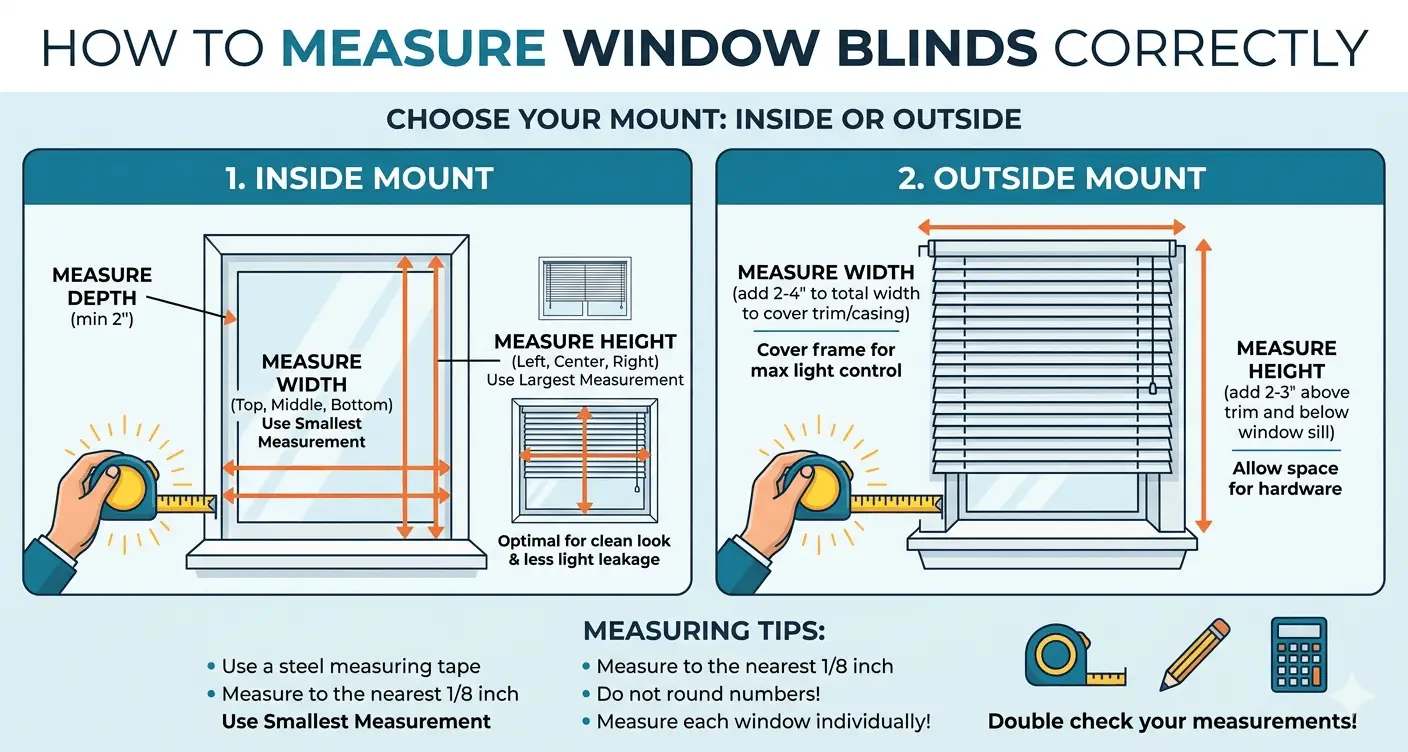
Accurate window blind measurement is the foundation of a perfect interior finish because even a few millimeters of error can affect light control, privacy, and overall appearance. When blinds are measured correctly, they sit flush within the window frame or align perfectly outside it, ensuring smooth operation and a clean architectural look. Incorrect measurements often lead to common issues such as light gaps, uneven hanging, poor insulation, and mechanical friction during operation. Whether you are installing roller blinds, zebra blinds, wooden blinds, or vertical blinds, precise measurement ensures that your investment in custom window treatments delivers long-term performance, comfort, and aesthetic value.
Tools You Need Before Measuring Window Blinds
Before you begin measuring window blinds, it is essential to use the correct tools and prepare the window area properly to avoid errors. A steel measuring tape is highly recommended because it provides accurate, rigid measurements compared to flexible fabric tapes. You will also need a pencil or notes app to record measurements clearly, especially when measuring multiple windows across different rooms. A stable step stool is necessary for tall windows to ensure safety and accuracy. It is also helpful to clean the window area and remove curtains or existing blinds so you can measure the actual recess or frame without obstruction. Preparation ensures consistency and reduces the risk of costly mistakes when ordering custom blinds.
Inside Mount vs Outside Mount Window Blinds
Choosing between inside mount and outside mount is the most important decision before you measure window blinds because it directly affects how and where the blind will be installed. Inside mount blinds fit neatly within the window recess, offering a minimalist and built-in appearance that works well in modern interiors. Outside mount blinds are installed above or outside the window frame, providing better light coverage and flexibility for uneven or shallow recesses. Each option has different measurement requirements, and selecting the wrong one can impact both function and design.
| Feature | Inside Mount | Outside Mount |
| Appearance | Clean, recessed, architectural | Bold, full coverage, flexible |
| Light Control | Moderate | High (better blackout) |
| Installation | Inside window frame | Above or outside frame |
| Best For | Modern interiors, deep recesses | Bedrooms, blackout needs, uneven frames |
Inside mount is preferred for a sleek, integrated look, while outside mount is ideal when maximum light blockage, privacy, or visual enlargement of the window is required.
How to Measure Window Blinds for Inside Mount
Measuring for inside mount window blinds requires precision because the blind must fit perfectly within the window recess without friction or gaps. Start by measuring the width at three points: top, middle, and bottom of the recess. Always record the smallest measurement to ensure the blind fits comfortably without rubbing against the sides. Next, measure the height at three points: left, center, and right, and use the longest measurement to ensure full coverage of the window opening. It is also important to check the recess depth, as some blinds such as wooden or zebra blinds require more space for brackets and mechanisms than standard roller blinds. Consistency in measurement ensures the blind operates smoothly and maintains a professional, built-in appearance that enhances the overall interior design.
How to Measure Window Blinds for Outside Mount
Outside mount window blinds are measured differently because they are designed to cover not just the glass but also part of the surrounding wall or frame. Begin by measuring the width of the window opening and then add additional overlap on both sides, typically to improve light control and privacy. This overlap ensures that no light leaks enter from the edges, especially in bedrooms or media rooms. Next, decide the mounting height, which is usually a few inches above the window frame, and measure from that point down to where you want the blind to end. Outside mount blinds offer greater flexibility in design and are ideal for windows with shallow recesses, uneven frames, or when a more dramatic and full-coverage look is desired.
Measuring Different Types of Window Blinds
Different blind types require slight variations in measurement technique because of their structure, weight, and functionality. Understanding these differences ensures better installation results and longer product lifespan.
Roller Blinds: Roller blinds are among the easiest to measure, but accuracy in width and drop is still essential for a clean finish. For inside mounts, ensure the fabric roll clears the recess edges, while for outside mounts, allow extra width for full blackout coverage. The operating side and bracket space should also be considered to avoid obstruction.
Zebra Blinds: Zebra blinds require precise width measurement because their alternating sheer and opaque layers must align perfectly within the window frame. Even minor misalignment can affect the visual pattern and light control performance. A centered and balanced installation is critical for achieving their modern aesthetic appeal.
Wooden and Aluminum Blinds: Wooden and aluminum blinds are heavier and require careful attention to recess depth and mounting strength. Ensure the window frame can support the weight and that there is enough clearance for slats to tilt without obstruction. These blinds are ideal for structured, premium interiors but demand precise measurement for safe installation.
Vertical Blinds: Vertical blinds are commonly used for large windows, sliding doors, and office spaces. They are typically measured for outside mount to ensure full coverage and smooth operation. Accurate width measurement is crucial to allow proper slat movement without crowding or gaps.
Common Mistakes When Measuring Window Blinds
One of the most common mistakes in window blind measurement is taking only a single measurement instead of checking multiple points across the frame. Many windows are not perfectly square, and ignoring this can lead to poor fitting blinds. Another frequent error is rounding measurements instead of recording exact values, which can cause visible gaps or tight fittings. People also often forget to account for handles, locks, or window cranks that may interfere with blind operation. Additionally, choosing the wrong mount type before measuring can completely affect the final result, especially in rooms where light control and privacy are critical.
When to DIY vs Professional Blind Measurement Service
Measuring window blinds yourself is practical for standard-sized windows and simple installations, especially if you follow proper steps and double-check measurements. However, professional measurement services are highly recommended for large windows, motorized blinds, custom installations, or premium interior projects where precision is critical. Professionals not only ensure accurate measurements but also assess depth, alignment, bracket positioning, and overall design compatibility. In high-end residential or commercial spaces, expert measurement significantly reduces the risk of costly installation errors and ensures a polished, long-lasting result.
Final Checklist for Perfect Window Blind Measurement
Before placing your order for custom window blinds, always confirm the mounting type, double-check width and height at multiple points, and verify recess depth or available wall space. Ensure there are no obstructions such as handles or trims that may interfere with installation or operation. Record exact measurements without rounding and match them with the selected blind type for compatibility. Taking a careful, methodical approach at this stage guarantees better light control, improved privacy, and a clean, professional finish once the blinds are installed. Accurate measurement is not just a technical step—it is the key to achieving perfectly fitted, visually balanced, and long-lasting window treatments in any space.