
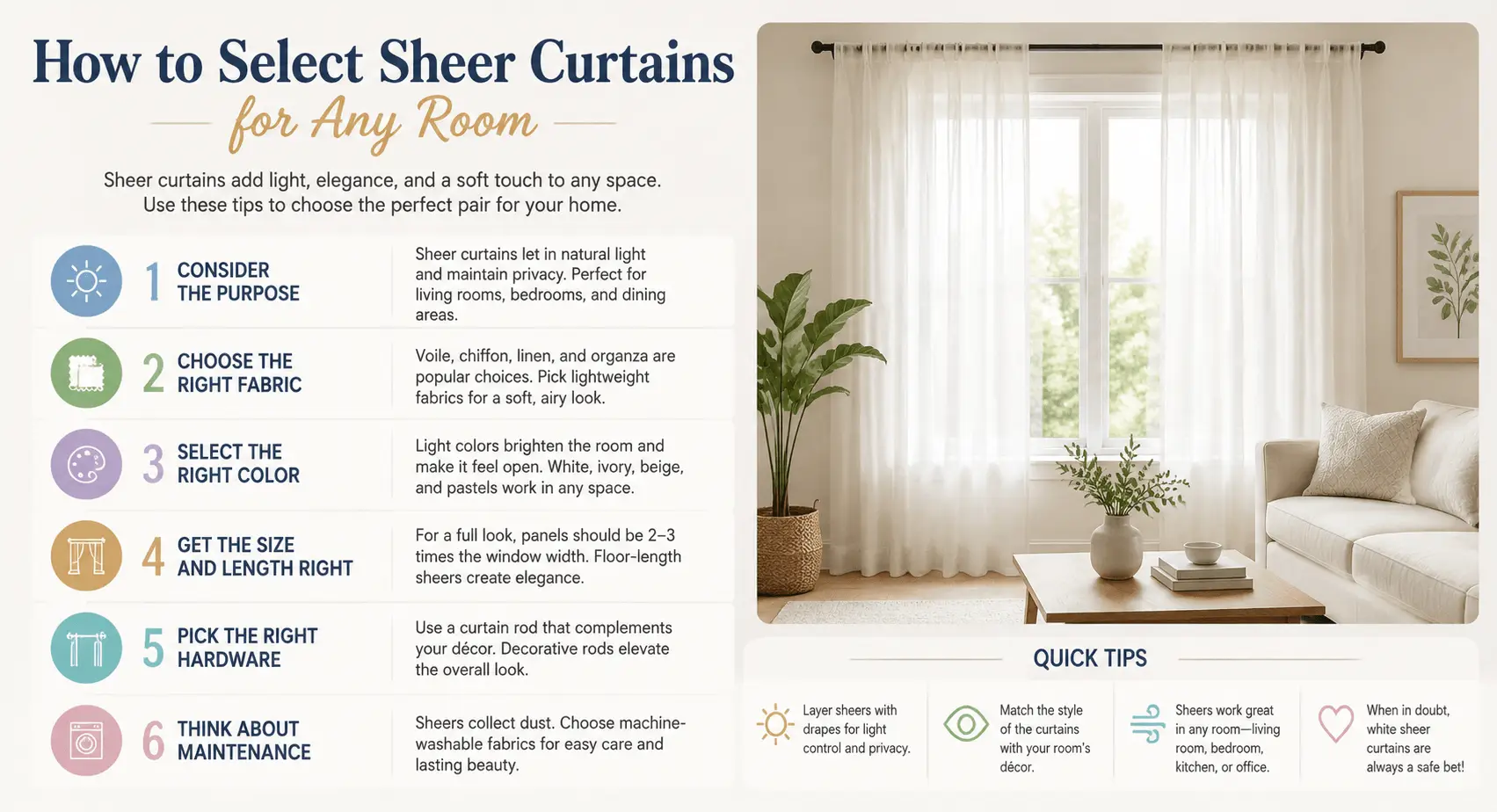
Knowing how to select sheer curtains starts with understanding that they are not just decorative fabric, but a functional window treatment that affects light, privacy, and the overall atmosphere of a room. Sheer curtains soften natural daylight, reduce glare, and add visual flow to interiors, but their performance depends heavily on fabric density, color, installation height, and how they interact with the surrounding space. In modern homes, apartments, and offices, the right sheer curtains can make a room feel brighter, more open, and more refined while still maintaining a comfortable level of privacy.
Start With Function Before Style
The most important step in choosing sheer curtains is deciding what role they need to play in the room. If the goal is simply to diffuse natural light and reduce harsh sunlight, a lightweight sheer fabric with an open weave may be enough. However, if the room is overlooked by neighboring buildings or faces busy outdoor areas, a denser sheer fabric is often required to provide better daytime privacy without blocking daylight completely. This functional decision is more important than color or design because it directly affects comfort, usability, and how the room feels throughout the day.
Choosing the Right Sheer Fabric for Your Space
Lightweight Sheer Fabrics for Airy Interiors: Light voile or similar lightweight fabrics are ideal for creating a soft, airy atmosphere in living rooms and open spaces where natural light is a priority. They gently filter sunlight while maintaining a bright and spacious feel.
Textured Sheers for Balanced Privacy: Linen-look or textured sheer fabrics offer a slightly denser weave that improves privacy while still allowing light to pass through. These are well-suited for family living rooms, dining areas, and modern interiors that need a more refined finish.
Structured Sheers for Tailored Interiors: More structured sheer fabrics hold their shape better and create a cleaner architectural look. They are often used in contemporary apartments or offices where a crisp, minimal aesthetic is preferred.
Understanding Transparency and Privacy Levels
Transparency is one of the most important factors when selecting sheer curtains, yet it is often misunderstood. A fabric that looks suitable when folded may behave very differently when stretched across a full window in natural daylight. Light direction, window size, and exterior surroundings all influence how much privacy a sheer curtain can actually provide. For this reason, fabric samples should always be viewed in real lighting conditions to ensure the desired balance between visibility and softness is achieved. In most cases, medium-density sheers offer the best compromise between daylight flow and daytime privacy.
Choosing the Right Color for Sheer Curtains
Color selection plays a major role in how sheer curtains interact with natural light. While bright white remains a popular choice for its clean and minimal appearance, softer tones such as off-white, beige, sand, and light grey often create a more refined and balanced interior look. These warmer neutrals adapt better to different wall colors, flooring materials, and lighting conditions. In rooms with strong sunlight, warmer tones can help soften brightness, while cooler whites work best in modern, minimal interiors with neutral palettes.
Getting the Proportions Right: Length and Width
Proper proportion is essential when learning how to select sheer curtains, as incorrect sizing can make even high-quality fabric look unfinished. Sheer curtains are typically more effective when mounted close to the ceiling and allowed to fall fully to the floor, as this creates the illusion of taller ceilings and larger windows. Width is equally important because sheers require enough fullness to create soft folds when closed. Without adequate width, the fabric can appear flat and visually incomplete, reducing both aesthetic impact and functional privacy.
Choosing the Right Heading Style for Sheer Curtains
Wave Curtains for Modern Interiors: Wave headings are one of the most popular choices for sheer curtains in contemporary homes due to their smooth, evenly spaced folds that create a clean and structured appearance. They work especially well with full-height windows and minimalist interior designs.
Eyelet Curtains for Simple Elegance: Eyelet curtains offer a more casual and straightforward look, making them suitable for residential spaces where ease of use and simplicity are priorities. However, they provide a less tailored appearance compared to wave systems.
Pinch Pleat Curtains for Classic Style: Pinch pleat headings add structure and formality, making them ideal for traditional interiors or larger rooms where a more decorative presence is desired at the window.
Considering Layering Options for Better Functionality
In many interiors, sheer curtains work best as part of a layered window treatment system rather than as a standalone solution. Layering them with blackout curtains or roller blinds allows for greater flexibility in light control and privacy. During the day, sheers provide soft daylight and visibility control, while additional layers can be used at night for full privacy or complete darkness. This approach is especially effective in bedrooms, street-facing rooms, and multifunctional living spaces where lighting conditions change throughout the day.
Maintenance and Practical Living Considerations
When selecting sheer curtains, it is important to consider how they will perform in daily use. In busy households, rental properties, or office environments, durability and ease of maintenance should be prioritized alongside aesthetics. Some sheer fabrics are more resistant to wrinkling and wear, while others offer a softer but more delicate appearance. Choosing the right balance ensures that the curtains remain visually appealing and functional over time without requiring excessive upkeep.
Why Custom Sheer Curtains Deliver Better Results
Custom-made sheer curtains provide a significantly better outcome than ready-made options because they are designed specifically for the dimensions, lighting conditions, and interior style of a space. Precise measurement ensures proper length, width, and fullness, which directly impacts both appearance and performance. Custom production also allows for better fabric selection, heading style coordination, and professional installation, all of which contribute to a more polished and intentional final result. This level of detail is especially important for sheer fabrics, where small imperfections are more visible due to their lightweight and translucent nature.
Final Thoughts
Selecting sheer curtains is ultimately about balancing light, privacy, and proportion in a way that suits the specific needs of a room. When chosen carefully, they can transform interiors by making them feel brighter, softer, and more visually refined without sacrificing comfort or privacy. The best results come from considering function first, then selecting the right fabric, color, size, and heading style to match the space. When these elements are properly aligned, sheer curtains become more than just window coverings—they become an essential part of a well-designed and comfortable interior environment.