
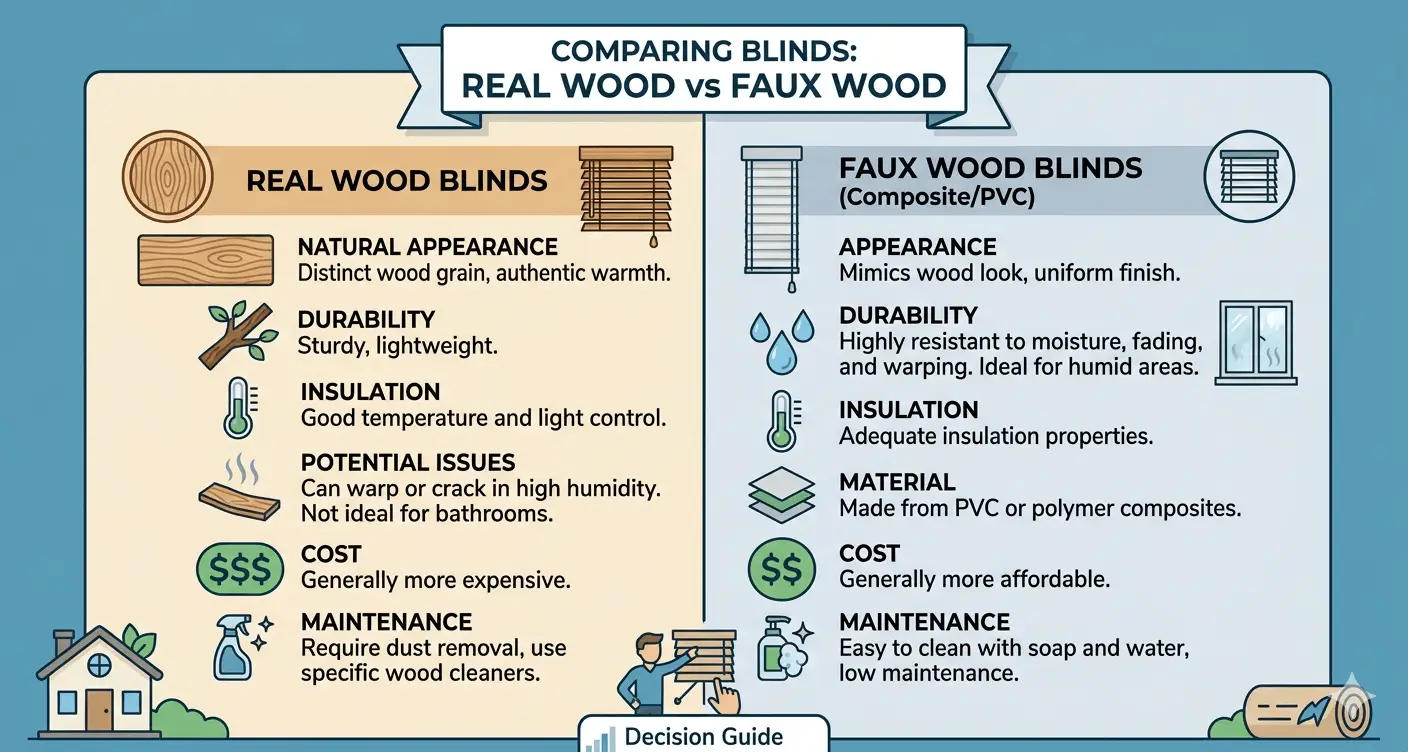
Choosing between real wood and faux wood blinds in Dubai is an important decision for homeowners who want the perfect balance of style, durability, and practicality. With Dubai’s strong sunlight, high temperatures, and modern interior trends, window blinds must do more than look good—they must also perform well in daily conditions. Both real wood and faux wood blinds offer unique advantages depending on the room, budget, and maintenance preferences. Understanding their differences helps you select the right option for your bedroom, living room, kitchen, or office while ensuring long-term comfort and visual appeal.
What Are Real Wood Blinds?
Real wood blinds are made from natural timber, offering an authentic, warm, and premium appearance that enhances any interior space. Each slat has unique grain patterns, making every installation slightly different and visually rich. These blinds are lightweight, easy to operate, and commonly used in bedrooms, living rooms, dining areas, and offices where aesthetics play a major role. Their natural texture blends beautifully with wooden furniture, neutral walls, and luxury décor styles often seen in Dubai homes. However, real wood requires proper care and should be protected from excessive moisture and humidity to maintain its quality over time.
What Are Faux Wood Blinds?
Faux wood blinds are made from PVC or composite materials designed to replicate the appearance of natural wood. They provide a similar visual effect but are more resistant to moisture, heat, and daily wear. This makes them ideal for areas like kitchens, bathrooms, and laundry rooms where humidity levels are higher. Faux wood blinds are also easier to clean and maintain, which is especially useful in Dubai’s dusty environment. While they may not have the same natural depth as real wood, modern designs closely mimic wood textures, making them a practical and cost-effective alternative for many households.
Key Differences Between Real Wood and Faux Wood Blinds
| Feature | Real Wood Blinds | Faux Wood Blinds |
| Material | Natural timber | PVC / composite |
| Appearance | Premium, natural grain | Wood-like finish |
| Moisture Resistance | Low to moderate | High |
| Durability | High (dry areas) | Very high |
| Weight | Lightweight | Heavier |
| Maintenance | Requires gentle care | Easy to clean |
| Cost | Higher | More affordable |
Aesthetic Appeal and Interior Compatibility
Real wood blinds deliver a premium and luxurious aesthetic that enhances elegant interiors, especially in villas and high-end apartments. Their natural tones create warmth and depth, making rooms feel more inviting. Faux wood blinds, on the other hand, provide a clean and modern look that works well in functional spaces or budget-friendly projects. Both options integrate well with Dubai’s popular interior styles, including minimalist, contemporary, and luxury design themes. The choice ultimately depends on whether you prioritize natural authenticity or practical versatility.
Performance in Dubai’s Climate
Dubai’s climate plays a major role in selecting the right blinds. Real wood performs well in dry, climate-controlled spaces such as bedrooms and living rooms but may be affected by humidity in kitchens or bathrooms. Faux wood blinds are better suited for challenging environments because they resist moisture and temperature changes more effectively. Both types help reduce sunlight, control glare, and improve indoor comfort, but faux wood generally offers better long-term stability in high-humidity or high-use areas.
Best Room Applications for Each Type
Living Rooms and Bedrooms (Real Wood Preferred): Real wood blinds are ideal for bedrooms and living rooms where style, comfort, and a warm atmosphere are priorities. They enhance natural lighting while maintaining privacy and elegance.
Kitchens and Bathrooms (Faux Wood Preferred): Faux wood blinds perform best in kitchens and bathrooms due to their moisture resistance and easy cleaning properties, making them more practical for humid environments.
Offices and Workspaces: Both options work well in offices, but faux wood is often preferred for durability, while real wood adds a more premium corporate look in executive spaces.
Maintenance and Cleaning Requirements
Real wood blinds require gentle maintenance, including regular dusting and minimal exposure to water. Excess moisture can damage their surface or cause warping. Faux wood blinds are easier to maintain and can be cleaned with a damp cloth, making them more convenient for busy households. In Dubai’s dusty environment, both types require routine cleaning, but faux wood offers a more low-maintenance solution for high-traffic areas.
How to Choose the Right Option for Your Home
Selecting between real wood and faux wood blinds depends on your priorities. If you want a luxurious, natural finish for dry indoor spaces, real wood is the best choice. If you need durability, moisture resistance, and easy maintenance, faux wood is more suitable. Many homeowners in Dubai combine both options—using real wood in main living areas and faux wood in kitchens or bathrooms—for a balanced and practical interior setup.
Final Verdict
Both real wood and faux wood blinds are excellent choices, but the better option depends on your space and lifestyle. Real wood blinds offer unmatched natural beauty and premium appeal, making them ideal for elegant interiors. Faux wood blinds provide superior durability and moisture resistance, making them more practical for everyday use in humid or high-traffic areas. For most Dubai homes, a combination of both delivers the perfect balance of style, performance, and long-term value. For expert guidance and custom-made solutions, professionals like Curtain and Blind Dubai can help you choose, measure, and install the right blinds for every room, ensuring a perfect fit for both design and climate conditions.