
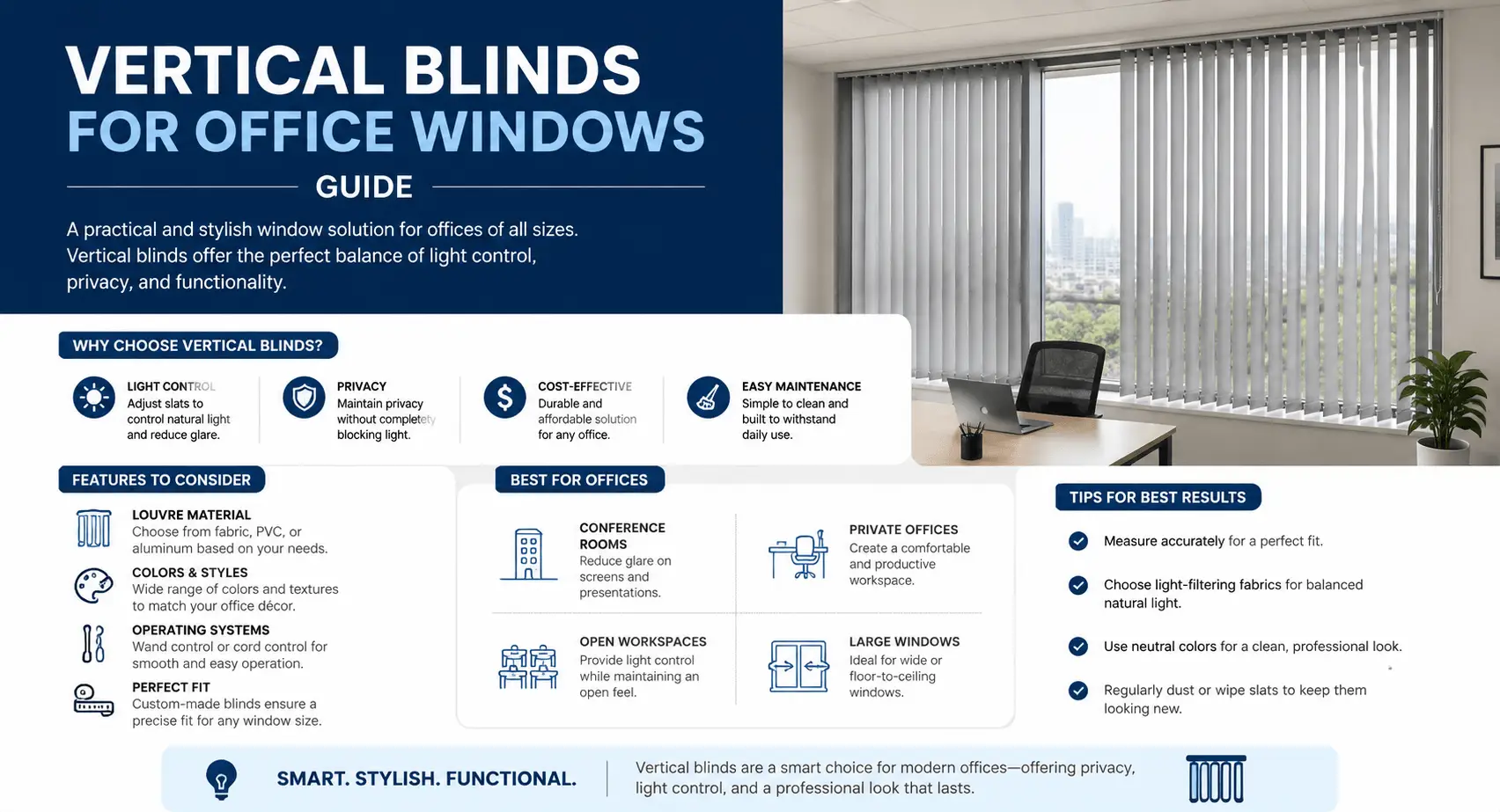
Vertical blinds for office windows are a highly functional and professional window treatment solution designed specifically for commercial environments where light control, privacy, and visual consistency are essential throughout the workday. Unlike traditional horizontal blinds, vertical blinds use upright slats that rotate and slide along a track, allowing precise control over sunlight without completely blocking natural brightness. This makes them especially effective in office settings with large glass surfaces, where managing glare, heat, and visibility is a daily requirement. When properly selected and installed, vertical blinds contribute to a clean, structured, and organized interior appearance that supports productivity and professional presentation.
Why Vertical Blinds Work Well in Office Environments
Vertical blinds are particularly suitable for offices because they address multiple functional needs at the same time, including glare reduction, daylight control, and privacy management. Office spaces often experience changing sunlight conditions throughout the day, especially in rooms with large or west-facing windows. Vertical blinds allow users to adjust the angle of slats to control how much light enters the space, reducing screen glare while still maintaining a bright and comfortable working environment. This flexibility makes them ideal for conference rooms, open-plan workspaces, and executive offices where both visibility and comfort are important.
Key Benefits of Vertical Blinds for Office Use
Effective Glare Control Without Blocking Natural Light: One of the most important advantages of vertical blinds is their ability to reduce direct sunlight and screen glare while still allowing daylight to enter the room. This helps improve employee comfort and reduces eye strain during long working hours, especially in digitally focused environments.
Adjustable Privacy for Professional Spaces: Vertical blinds provide a balanced level of privacy by allowing slats to be tilted according to need. This ensures that office interiors remain protected from outside visibility without creating a closed or restrictive atmosphere, which is important for both staff comfort and client-facing areas.
Clean and Structured Aesthetic: The vertical alignment of the slats creates a neat, organized visual rhythm that complements modern commercial interiors. This structured appearance enhances the professional look of office spaces, making them feel more intentional and well-designed.
Ideal for Large Window Coverage: Vertical blinds are especially effective for wide or floor-to-ceiling windows where other blind systems may appear less efficient or visually fragmented. Their sliding mechanism ensures smooth coverage across large spans of glass.
How Vertical Blinds Improve Workplace Functionality
Better Light Distribution Across Workstations: By adjusting the slat angle, vertical blinds allow controlled distribution of natural light throughout the office, reducing harsh reflections on computer screens and improving visibility across multiple workstations.
Improved Thermal Comfort: Vertical blinds help reduce solar heat gain by limiting direct sunlight exposure, contributing to a more stable indoor temperature and reducing reliance on artificial cooling systems in sun-exposed office areas.
Flexible Daylight Management: Offices require different lighting conditions throughout the day depending on tasks and usage. Vertical blinds allow quick adjustments, making it easier to shift between bright collaborative environments and focused working conditions.
Choosing the Right Vertical Blinds for Office Windows
Fabric vs PVC Materials: Fabric vertical blinds offer a softer, more refined appearance and are suitable for modern office interiors, while PVC or synthetic materials provide higher durability and are easier to maintain in high-traffic commercial environments.
Light Filtering Levels: Different fabric densities allow varying degrees of light control. Lighter fabrics create a more open and bright atmosphere, while denser materials provide stronger glare reduction and improved privacy for meeting rooms and executive offices.
Color and Interior Coordination: Neutral tones such as grey, beige, and white are commonly used in office settings because they maintain a professional and timeless appearance. Darker shades can be used for more formal or high-contrast interior designs, depending on branding and design intent.
Vertical Blinds vs Other Office Window Treatments
| Feature | Vertical Blinds | Roller Blinds | Curtains |
| Large Window Coverage | Excellent | Moderate | Good |
| Light Direction Control | High | Low | Medium |
| Office Suitability | High | High | Medium |
| Maintenance | Easy | Easy | Moderate |
| Professional Appearance | Structured | Minimal | Soft |
Vertical blinds are often preferred in offices because they provide superior control over large glass areas while maintaining a structured and professional appearance that aligns well with commercial design standards.
Where Vertical Blinds Work Best in Offices
Conference and Meeting Rooms: Vertical blinds are highly effective in meeting rooms where presentations and screen visibility are important. They allow quick adjustment of light levels without fully darkening the space, maintaining a balanced environment for discussion and collaboration.
Open-Plan Workspaces: In shared office environments, vertical blinds help manage sunlight across multiple workstations, ensuring consistent lighting conditions and reducing discomfort caused by direct sun exposure.
Reception and Client Areas: Reception areas benefit from vertical blinds because they maintain a polished, welcoming look while controlling external visibility and preventing excessive sunlight from affecting the space.
Glass Walls and Sliding Doors: Vertical blinds are ideal for sliding glass doors and partitioned office layouts because their side-to-side movement aligns naturally with large architectural openings, ensuring practical usability and smooth operation.
Motorized Vertical Blinds for Modern Offices
Motorized vertical blinds offer enhanced convenience and efficiency by allowing automated or remote-controlled operation. This is especially beneficial in large office environments where multiple windows need to be adjusted simultaneously or where blinds are installed in hard-to-reach areas. Motorization also contributes to a cleaner interior appearance by reducing visible cords and chains, making the workspace feel more modern and streamlined. In smart office setups, vertical blinds can be integrated into automated lighting or climate systems for improved energy efficiency and comfort management.
Importance of Custom Measurement and Installation
Custom measurement is essential for vertical blinds in office environments because commercial windows often vary in size, alignment, and structural design. Poorly fitted blinds can lead to uneven coverage, light gaps, and reduced functionality. Custom production ensures that each blind is precisely tailored to the window dimensions, resulting in better alignment and smoother operation. Professional installation further enhances performance by ensuring proper track leveling, secure mounting, and consistent slat movement across all windows, which is especially important in large office layouts where uniformity is critical.
Common Mistakes When Choosing Vertical Blinds for Offices
One of the most common mistakes is selecting standard-sized blinds without considering exact window measurements, which often leads to poor fit and uneven appearance. Another issue is choosing materials based solely on appearance without evaluating durability or maintenance needs in commercial environments. Incorrect color selection can also affect the overall atmosphere of the office, making it feel either too dark or too sterile. Proper planning and professional guidance help avoid these issues and ensure a more effective final result.
Final Thoughts
Vertical blinds for office windows remain one of the most practical and effective solutions for modern commercial interiors because they combine functionality, durability, and professional aesthetics in a single system. When properly selected and custom installed, they enhance workplace comfort, improve light control, and contribute to a cleaner, more organized office environment. Whether used in meeting rooms, open workspaces, or reception areas, vertical blinds provide a reliable and adaptable solution that supports both productivity and design quality in everyday office use.