
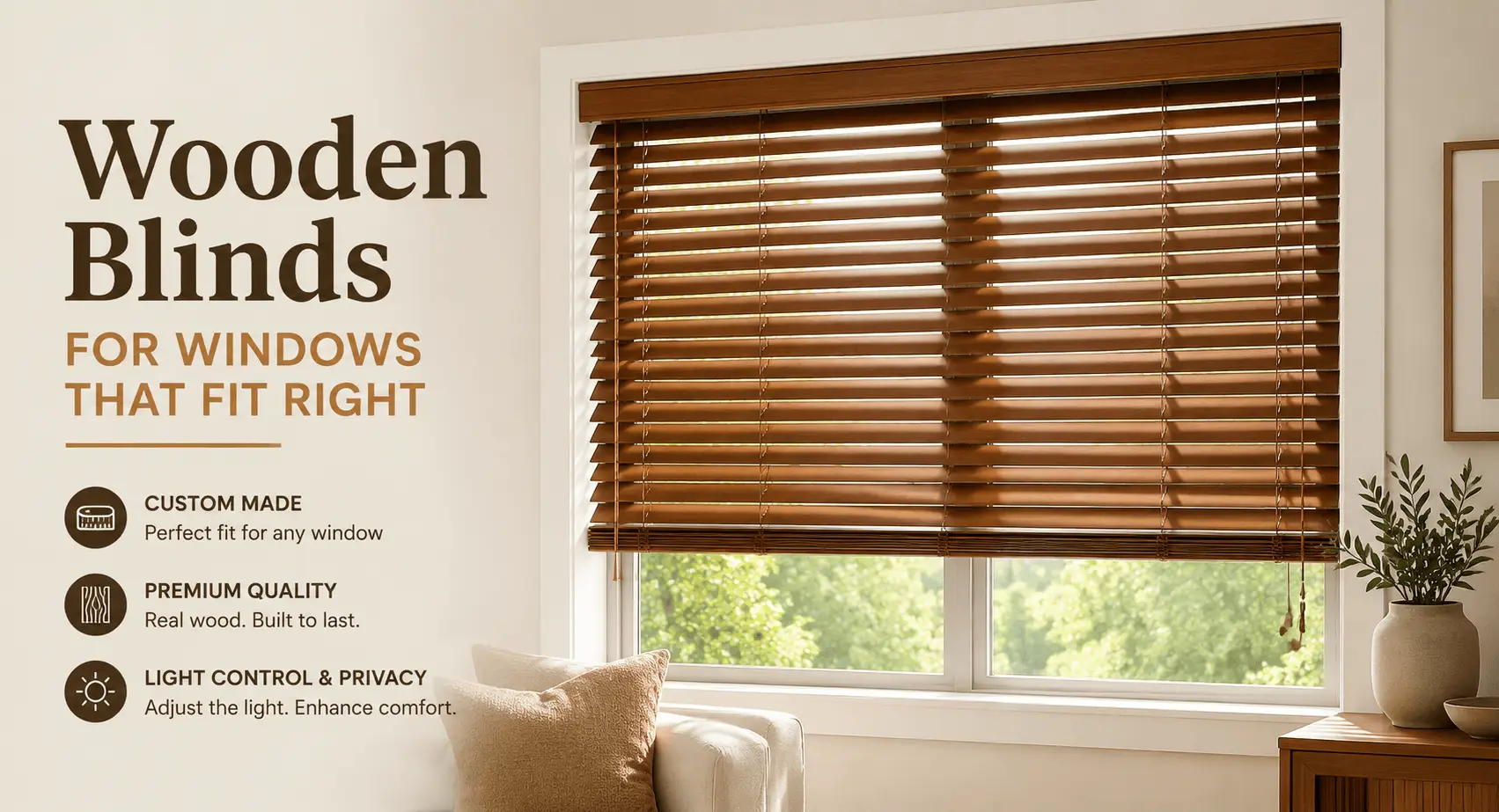
Wooden blinds for windows are a timeless window treatment solution that combines natural warmth, privacy, and precise light control in a clean, structured design that suits both residential and commercial interiors. Unlike soft fabric treatments, wooden blinds introduce architectural definition to a space through horizontal slats that can be adjusted to control daylight while maintaining a refined and uncluttered appearance. This makes them a popular choice for modern homes, villas, and office environments where a balance of style and functionality is essential. When custom made and properly installed, wooden blinds enhance the overall interior by adding depth, texture, and a sense of tailored finish.
Why Wooden Blinds Remain a Popular Choice
Wooden blinds continue to be in demand because they offer a rare combination of aesthetic appeal and practical performance. The natural texture of wood brings warmth to interiors that might otherwise feel cold or overly minimal, especially in spaces with glass, metal, or neutral-toned finishes. At the same time, their adjustable slats provide effective control over sunlight, glare, and privacy throughout the day. This flexibility makes them suitable for a wide range of environments, from bright living rooms to professional office settings, where comfort and visual clarity are equally important.
Key Benefits of Wooden Blinds for Windows
Natural Warmth and Visual Appeal: Wooden blinds introduce organic texture into interior spaces, helping to soften modern architectural elements such as glass walls, tiled floors, and clean-lined furniture. This creates a more balanced and welcoming environment.
Adjustable Light Control: The tilting slats allow users to fine-tune the amount of natural light entering the room without fully blocking it. This makes wooden blinds ideal for spaces where complete blackout is not required but glare control is still important.
Clean and Structured Finish: Unlike heavier fabric curtains, wooden blinds offer a crisp, architectural look that aligns well with modern interior design principles. They create a neat window line that enhances the overall structure of the room.
Privacy with Daylight Retention: Wooden blinds provide privacy while still allowing controlled daylight to enter the room, making them highly functional for both daytime and evening use.
Why Custom Wooden Blinds Make a Difference
Custom wooden blinds for windows offer a significantly better result compared to standard ready-made options because they are tailored to exact window dimensions, ensuring precise fit and improved visual alignment. Customization allows control over slat size, wood tone, finish type, and mounting style, resulting in a more cohesive interior design. Proper measurement also eliminates common issues such as light gaps, uneven alignment, or poor stacking, which can affect both appearance and performance. A made-to-measure approach ensures the blinds integrate seamlessly with the room rather than appearing as an added accessory.
Choosing the Right Wood Finish and Slat Design
Light Wood Finishes for Airy Interiors: Light natural tones such as oak, ash, or whitewashed finishes work well in bright, modern interiors. They enhance openness and pair easily with neutral color palettes.
Dark Wood Finishes for Contrast and Depth: Darker shades such as walnut or espresso add richness and sophistication, making them suitable for formal living rooms, offices, or interiors with strong contrast design elements.
Painted and Neutral Finishes for Versatility: White or off-white wooden blinds offer a clean, minimal look that blends seamlessly into contemporary interiors and works well with a wide range of wall colors and furnishings.
Slat Size and Its Visual Impact: Wider slats create a more modern and open appearance, especially suitable for large windows, while narrower slats offer a more traditional and detailed look. The choice depends on window scale and overall interior style.
Where Wooden Blinds Work Best in Homes and Offices
Living Rooms; Wooden blinds are highly effective in living rooms because they balance daylight control with a warm decorative presence. They help reduce glare while maintaining a comfortable and stylish atmosphere throughout the day.
Bedrooms: In bedrooms, wooden blinds provide privacy and moderate light control. For complete darkness, they may be paired with additional blackout solutions depending on sleep preferences.
Home Offices: Wooden blinds are ideal for home offices because they reduce screen glare while maintaining a professional and organized appearance that supports productivity.
Kitchens and Utility Areas: In moisture-prone areas, wood-look alternatives may be more practical than natural wood. Material selection should always consider humidity, heat, and maintenance requirements.
Real Wood vs Faux Wood Blinds
| Feature | Real Wood Blinds | Faux Wood Blinds |
| Appearance | Natural grain and premium finish | Wood-like appearance |
| Durability | Sensitive to moisture | High moisture resistance |
| Weight | Lightweight | Slightly heavier |
| Best Use | Bedrooms, living rooms, offices | Kitchens, bathrooms, humid areas |
Real wood blinds are preferred for their authentic texture and natural elegance, while faux wood options offer better durability in challenging environments such as kitchens or bathrooms.
Importance of Proper Installation
Installation quality plays a critical role in the performance and appearance of wooden blinds. Poor alignment can lead to uneven slats, light leakage, and difficulty in operation, which reduces both functionality and visual appeal. Professional installation ensures that the blinds are level, securely mounted, and operate smoothly, while also maintaining consistent spacing and stacking when raised. In larger homes or commercial spaces, proper installation becomes even more important to ensure uniformity across multiple windows.
Custom Measurement for a Perfect Fit
Accurate measurement is essential for achieving a polished finish with wooden blinds because even small inaccuracies can result in visible gaps or misalignment. Custom measurement ensures that each blind fits the exact dimensions of the window, whether installed inside the frame for a built-in look or outside the frame for better coverage. This precision not only improves aesthetics but also enhances light control and privacy performance, making the blinds more effective in everyday use.
Common Mistakes When Choosing Wooden Blinds
One of the most common mistakes is selecting blinds based only on appearance without considering room conditions such as sunlight exposure or humidity. Another issue is incorrect sizing, which leads to poor coverage and reduced functionality. Choosing the wrong slat size can also affect the overall balance of the room, making the blinds look either too heavy or too minimal for the space. Proper consultation and measurement help avoid these issues and ensure a well-integrated final result.
Final Thoughts
Wooden blinds for windows offer a refined combination of natural beauty, light control, and practical functionality, making them one of the most versatile window treatment options for modern interiors. When carefully selected, custom made, and professionally installed, they enhance both the visual and functional quality of a space by adding warmth, structure, and precision. Whether used in living rooms, bedrooms, or offices, wooden blinds provide a long-lasting solution that improves everyday comfort while elevating the overall interior design.